

Antonio Tamanti was born into Napoleonic Tuscany and died a few years before Montalcino became part of the Kingdom of Italy. In his lifetime the town’s old landed families were drawn into talk of roads, railways and farm improvement. Antonio is the man through whom the family line continues. He is also the clearest example of how the Tamanti combined a professional title, land in the countryside and a house in town.
A birth in 1810
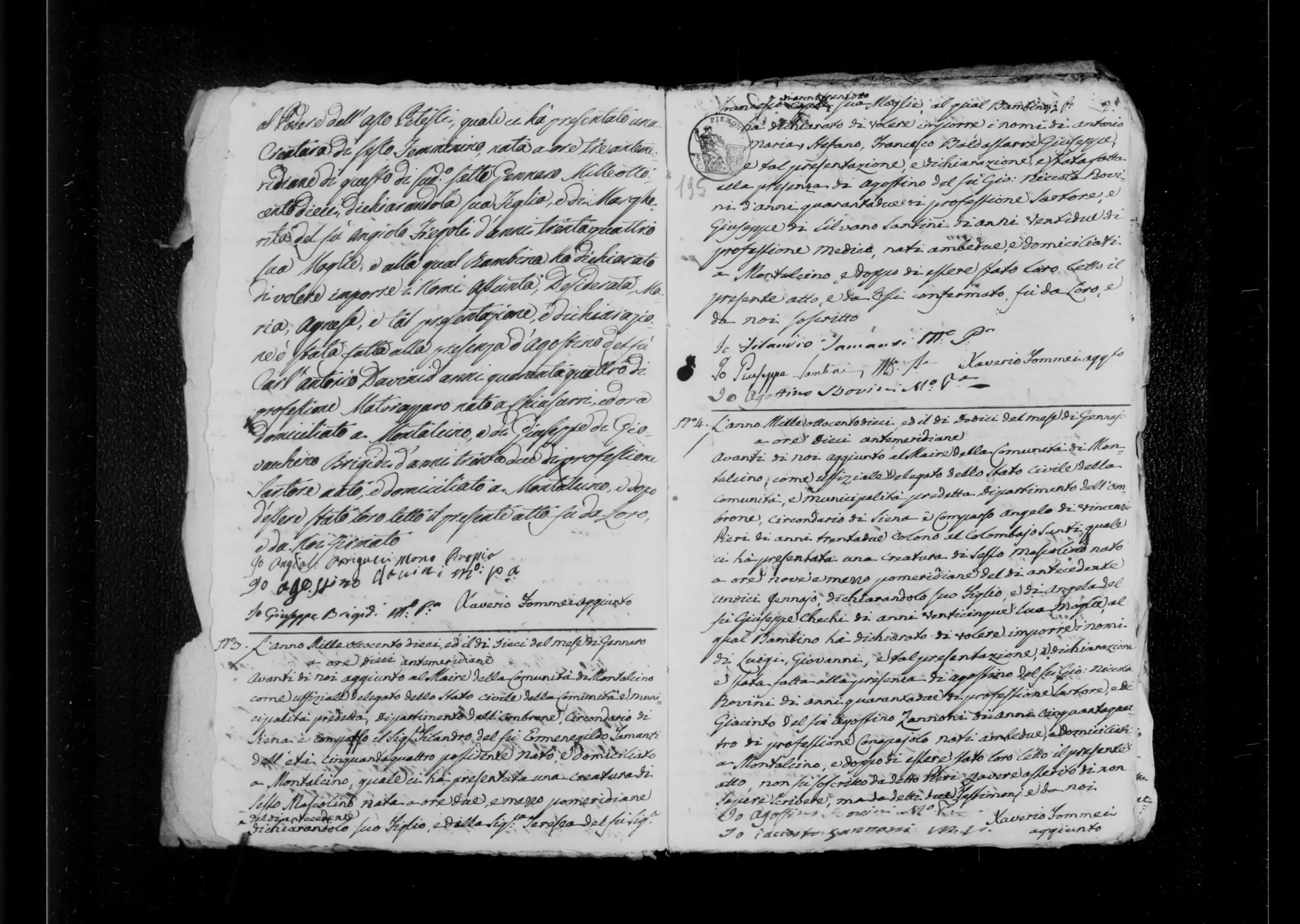
On 10 January 1810 the civil register recorded the birth of Antonio Tamanti, son of Filandro and Teresa (birth act, Nati reg. 61, act 3; original on Antenati). Carle’s genealogy calls him “dr. Antonio” and gives his dates as 1810–1854 (Carle, La patria locale, 1996, p. 298).
Land in the country, a house in town
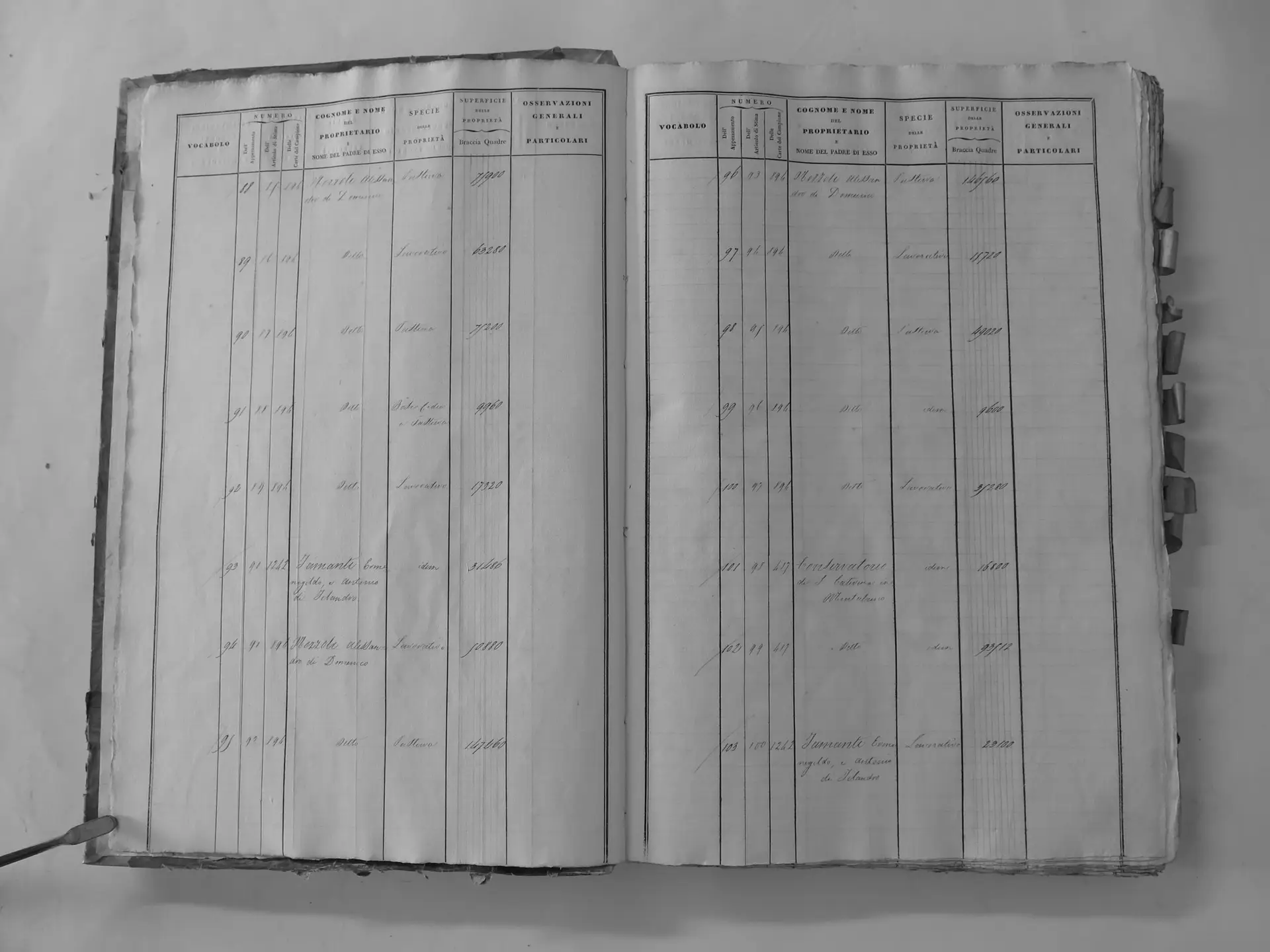
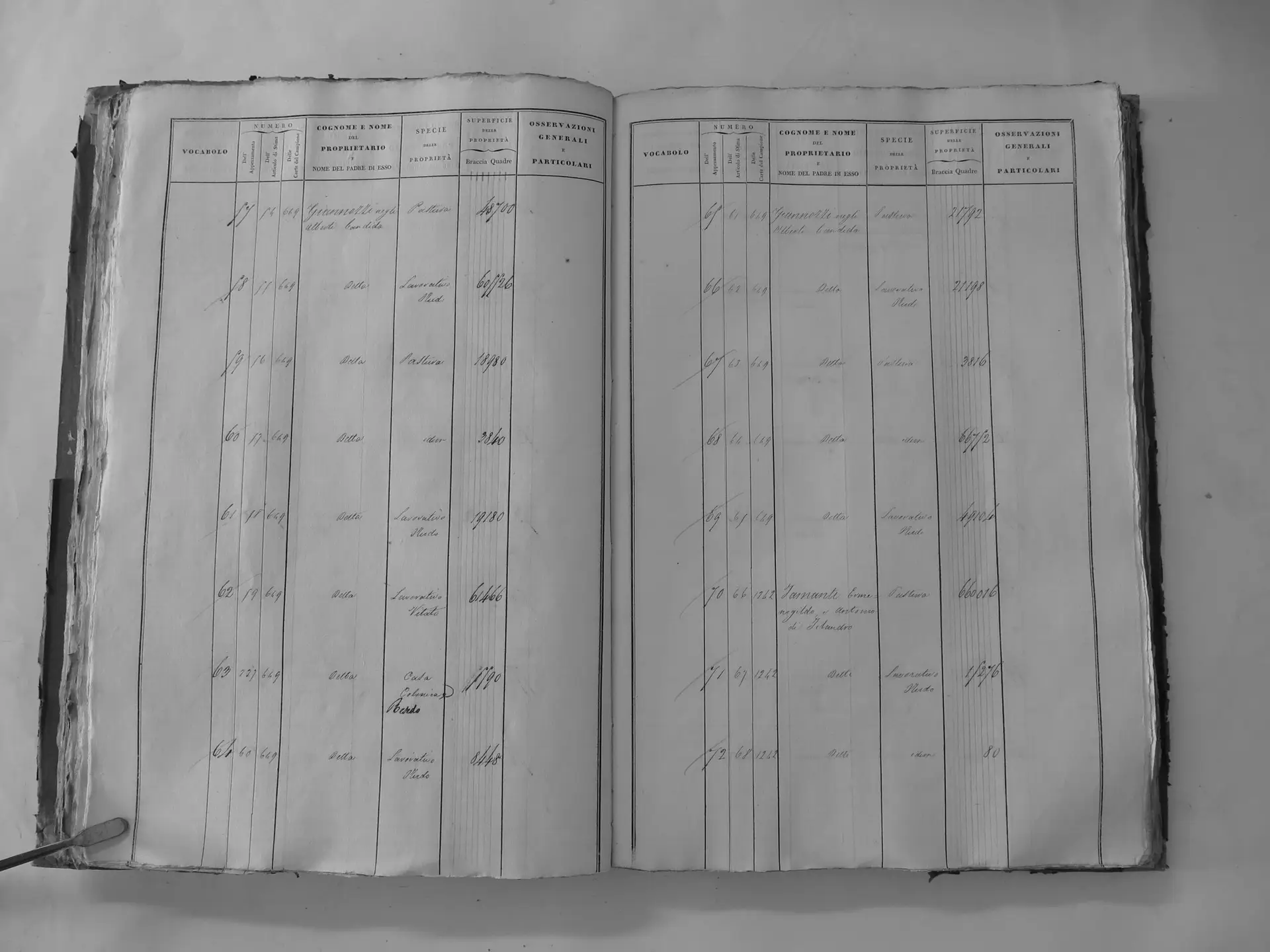
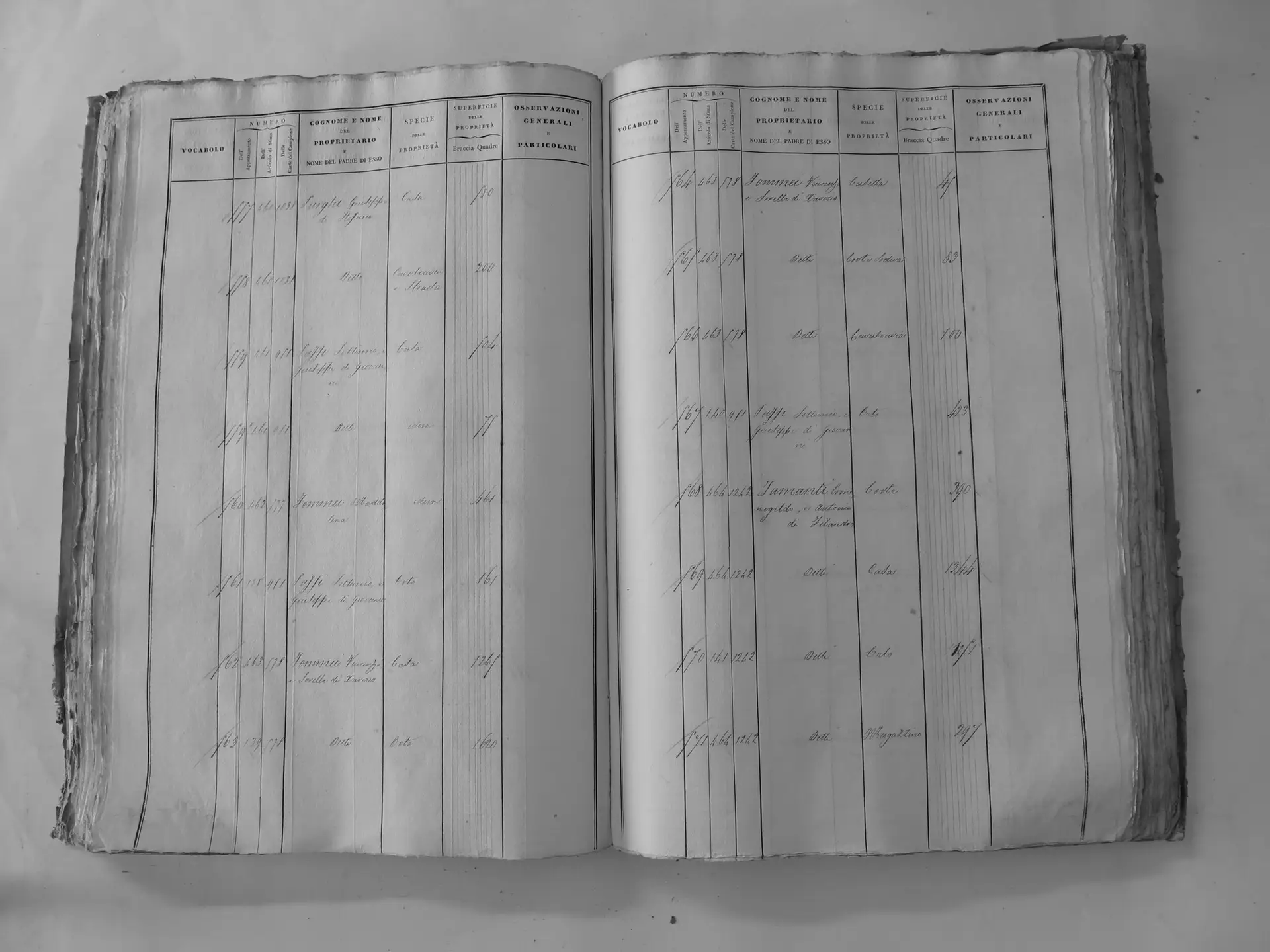
Antonio was still a boy when the cadastre of about 1820 recorded him and his brother Ermenegildo as joint owners of Il Casato. This was a working estate of 98 parcels at Sparampaglia, with fields, vines, woods and a farmhouse with a stable. The brothers also held land in section A of the cadastre and at Osservanza (Tavole indicative, Tomo I p. 9; Sparampaglia ledger, Tomo II p. 82). Around 1835 the same brothers were registered as owners of the town complex known as Casa Tamanti: a courtyard, a house of about 457 m², a garden and a storehouse on parcels 568–571 (Tavole indicative, Tomo III p. 164, as identified by the local historian Luisa Scrivani). The owner identifies parcel 569 with the footprint of today’s palazzo.
Gonfaloniere, census and railway
According to Carle, Antonio was Gonfaloniere of Montalcino, head of the town council, from 1835 (Carle, 1996, p. 298). The 1841 census, as reconstructed by Luisa Scrivani, lists “Tamanti Antonio, 31, proprietario” in the parish of Sant’Egidio. In the same year Ermenegildo, 37, is listed as a proprietor in San Lorenzo in San Pietro (Scrivani, Era il 1841 a Montalcino, pp. 107, 112, 132). Name, age and status all match Dr Antonio. Because the entry gives no address or title, the identification is high-confidence rather than proven.
In 1844 an Antonio Tamanti of Montalcino sat on a committee promoting a railway link between Siena and the Leopolda line. The census makes it more likely that this was Dr Antonio, but it is not yet certain. The railways promised to carry people and farm produce well beyond the hill towns. Within the same few decades the Santi and Biondi Santi branch of the family was beginning to make wine intended for long ageing.
The marriage of April 1847
At about 37 Antonio married. A monthly return from the parish of San Lorenzo in San Pietro for April 1847 names him as the son of Filandro and Teresa, of the parish of Sant’Egidio. It names his bride as Giuditta, daughter of Leopoldo (marriage entry, April 1847, no. 22; original on Antenati; parish cover sheet).
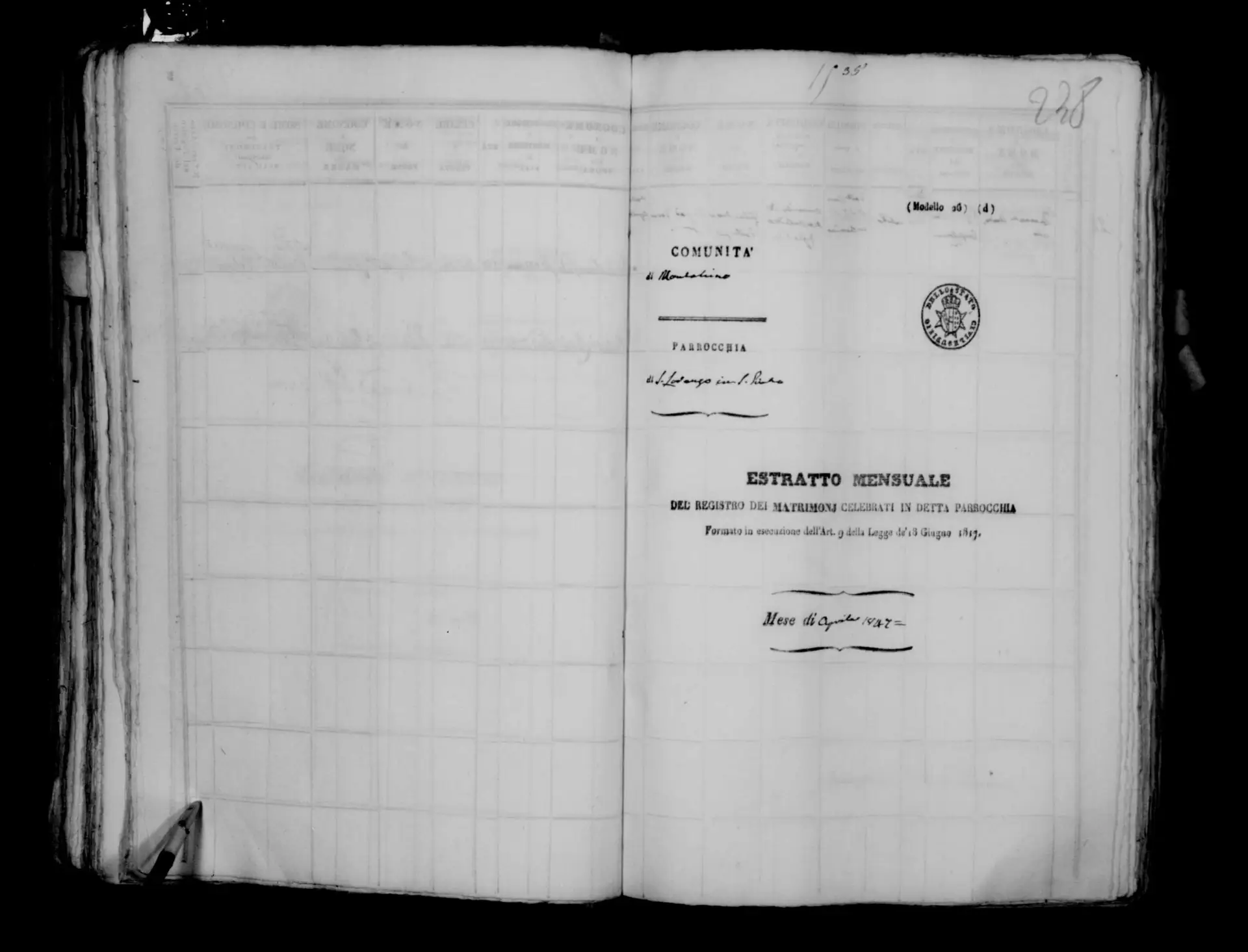

This corrects Carle, who names Antonio’s wife as “Fidalma Muzzarelli of Fano” (Carle, 1996, p. 298). Fidalma is a name from a later generation of the family. The owner’s family tree gives the bride as Giuditta Ruggerelli, born in 1827. That surname and the exact wedding day still need the full parish act.
Giacomo’s marriage, 1848
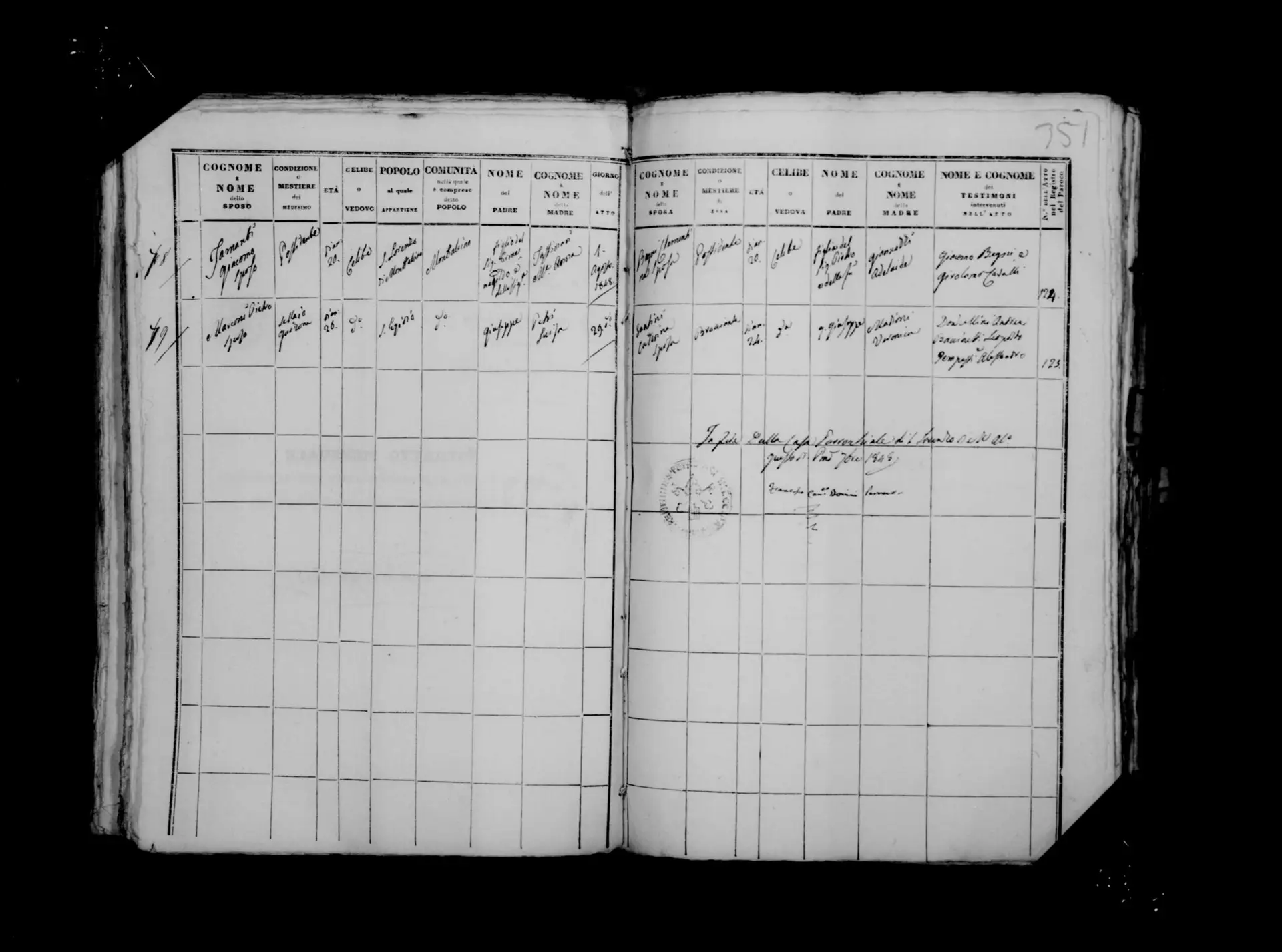
On 1 August 1848 Giacomo Tamanti, son of Ermenegildo, married Clementina Bagni (marriage entry of 1 August 1848; original on Antenati). This Giacomo was Antonio’s nephew, born about 1828. He was probably named after his great-uncle, the Giacomo who died in 1819. The storybook reads his mother’s name as M. Rosa Tassinari, but the reading is uncertain. An archive inventory lists a dossier on the betrothal and dowry of Ermenegildo Tamanti and Marianna Tassinari (Gabinetto Vieusseux, Tassinari-Colnaghi-Malvani inventory, TCM.Ta.II.4). Whether Marianna and Maria Rosa are the same woman is not yet established.
The later 1800s
Antonio died in 1854, only seven years after his marriage. According to Carle the line continues through his son Francesco, born in 1852, who married Maria Giuliani in 1873 (Carle, 1996, p. 298). Montalcino joined the Kingdom of Italy in 1860.
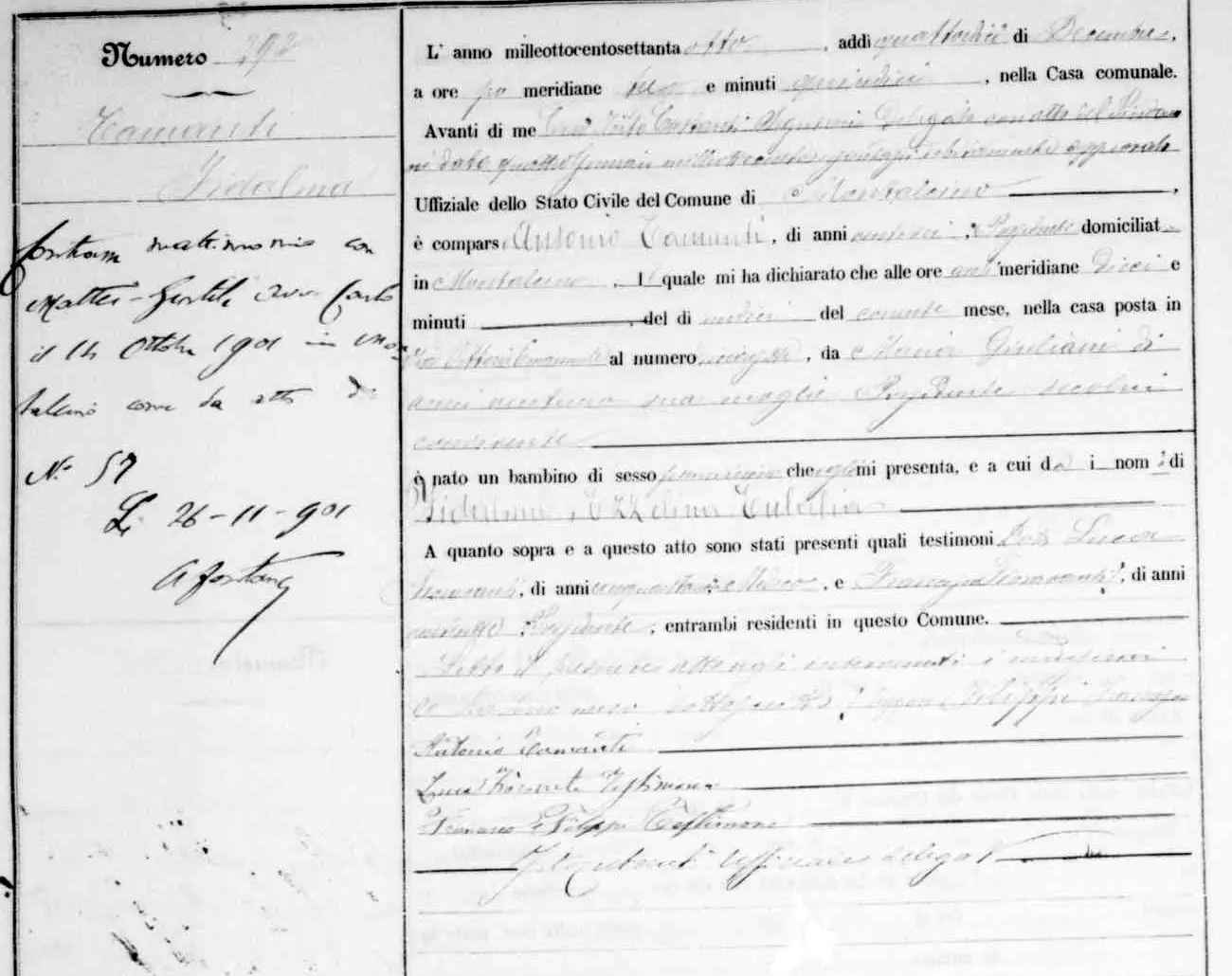
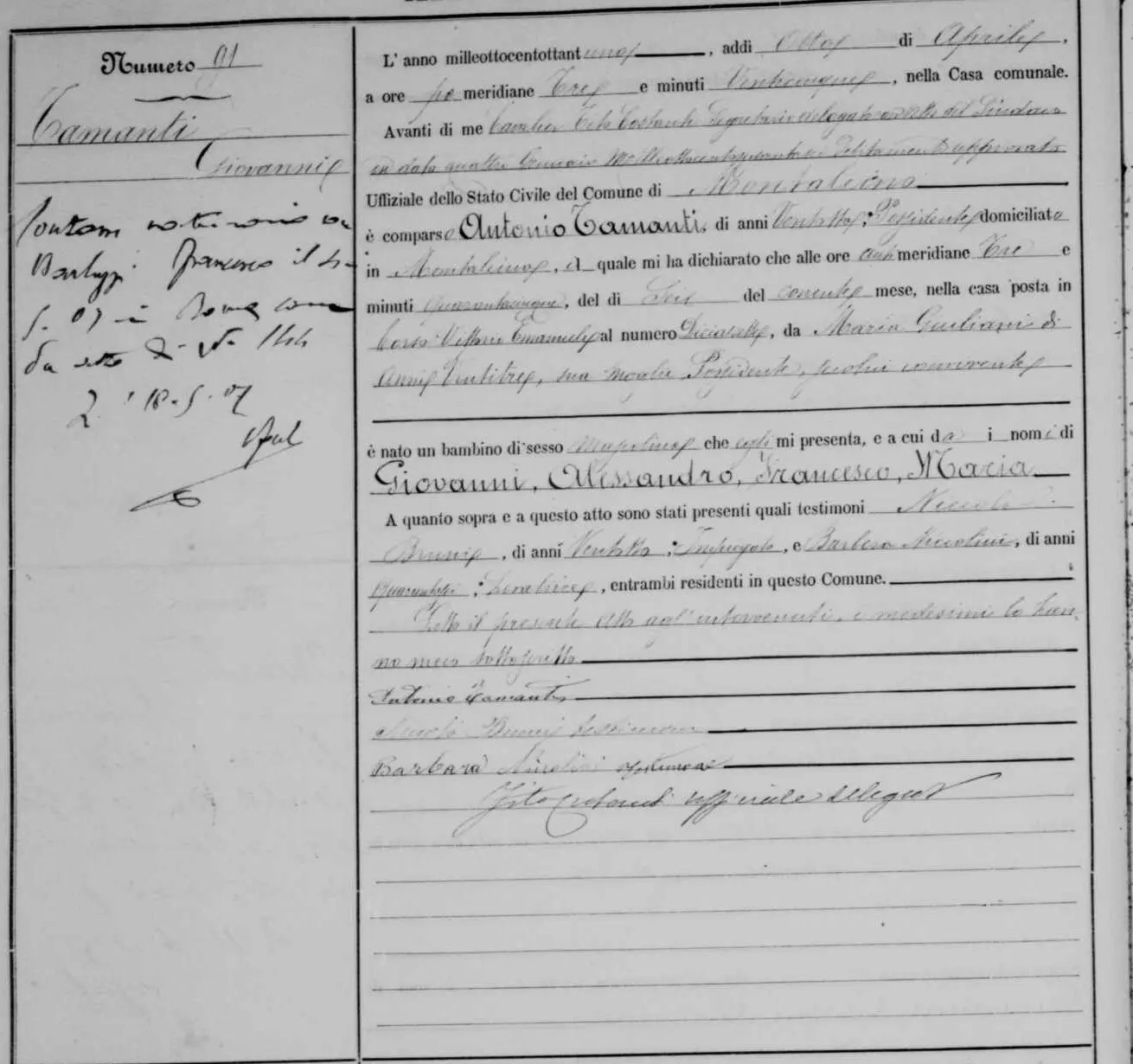
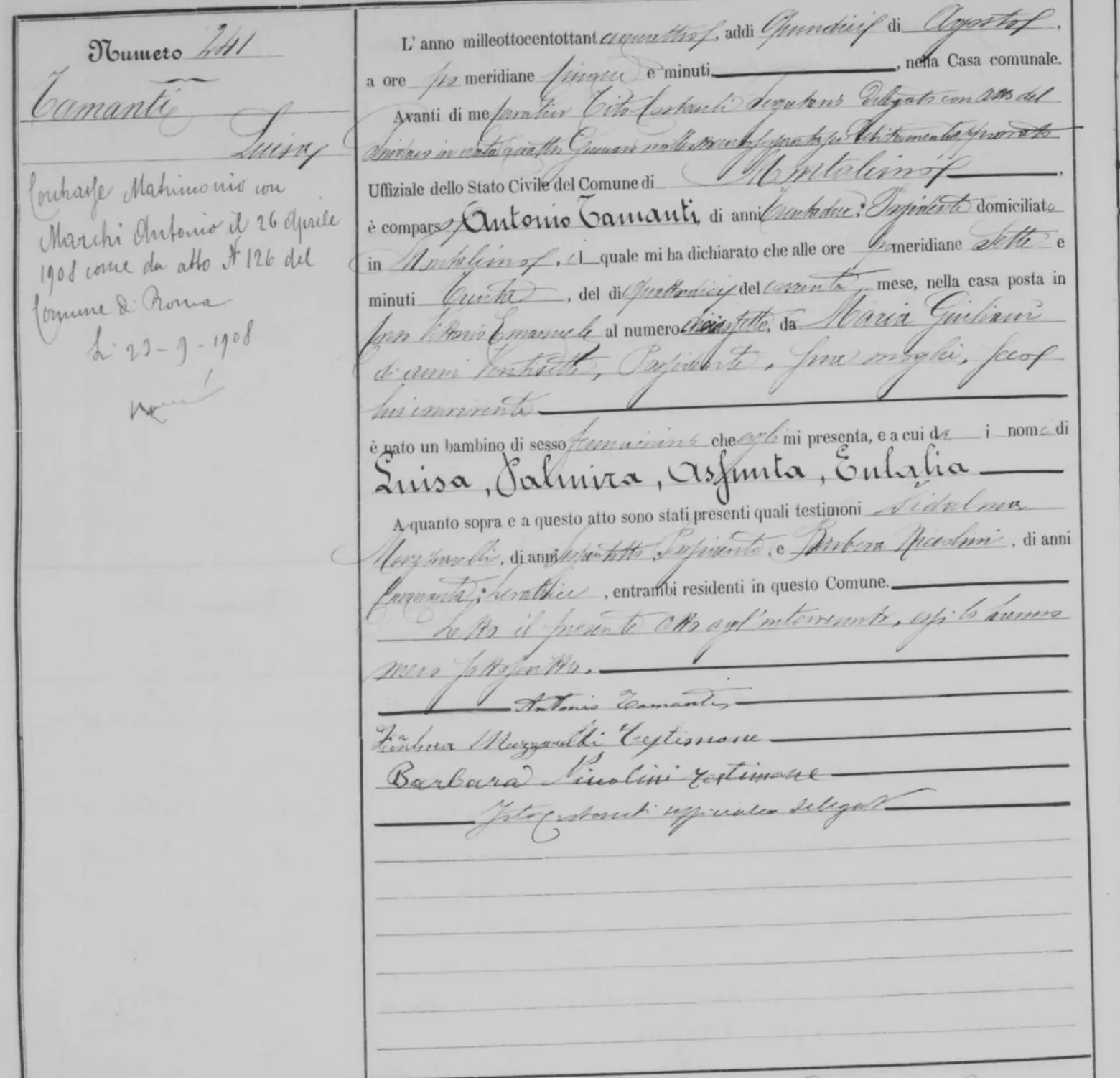
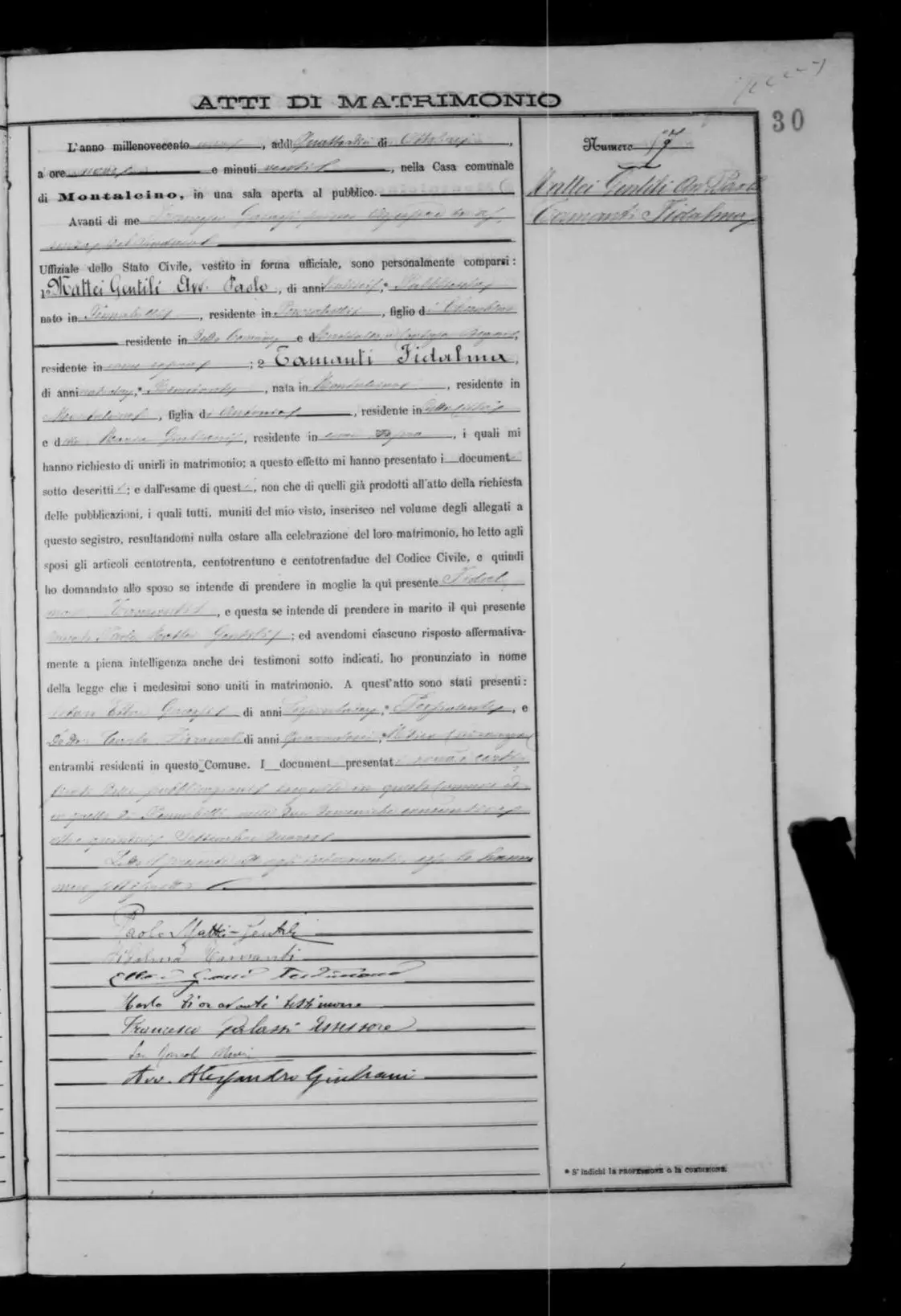
Three Tamanti births of these years are held in the civil registers: Fidalma Tamanti in 1878 (act 292), Giovanni Tamanti in 1881 (act 91) and Luisa Tamanti in 1884 (act 241). Giovanni’s parents were Francesco Antonio Tamanti and Maria Giuliani, and he was the officer who fell at Col di Lana in 1916. Fidalma married Paolo Mattei Gentili in Montalcino on 14 October 1901 and moved with him to Rome, where they raised eight children. That marriage record calls her father Antonio, “the landowner” (marriage act, 1901, act 57; Severini, “Mattei Gentili, Paolo”, Dizionario Biografico degli Italiani, vol. 72, 2008). The family tree gives her father as Francesco Antonio, so her exact place in the family is still an open question. So far no source has been found for Luisa’s parents.
Avv. Giuseppe Tamanti, Assessore
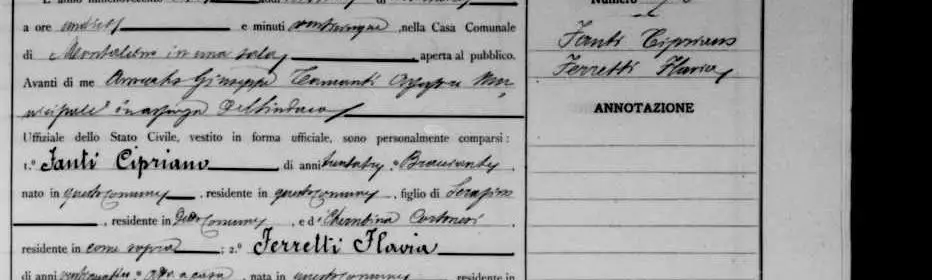
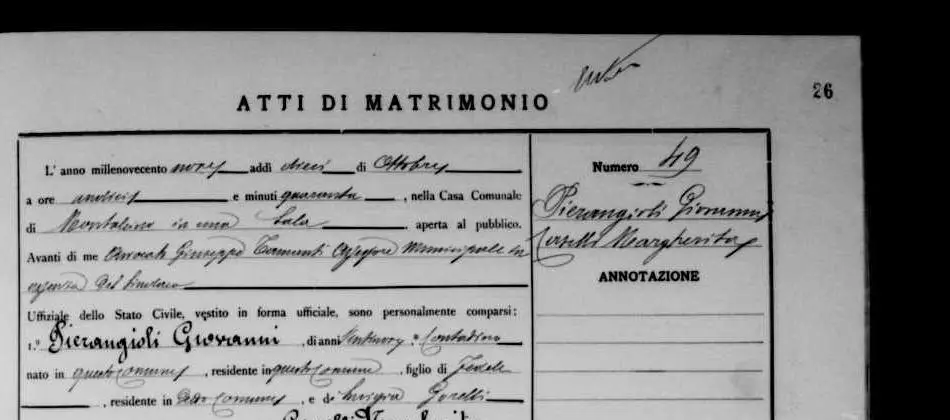
A new generation took on civic office. In 1908 and 1909 the lawyer Giuseppe Tamanti signed civil acts as Assessore, a member of the town’s governing council (1908, act 72; 1909, act 49). The family tree records a Giuseppe Tamanti, born in 1876, son of Francesco Antonio and Maria Giuliani. He married Agnese Calcagni. Their daughter Cecilia married Alessandro Feliziani, and her children still own part of the palazzo. The lawyer and the Giuseppe of 1876 are probably the same man, but no record yet states it.
Sources on this page
- Lucia Carle, La patria locale (Regione Toscana / Marsilio, 1996), p. 298
- Birth of Antonio Tamanti, 10 January 1810, Nati reg. 61, act 3 (Antenati)
- Tavole indicative, Tomo I p. 9; Tomo II p. 82 (Sparampaglia); Tomo III p. 164 (Città di Montalcino)
- Luisa Scrivani, correspondence of 28 August 2026 (Casa Tamanti parcels 568–571), and Era il 1841 a Montalcino, pp. 107, 112, 132
- Marriage of Antonio Tamanti and Giuditta, April 1847, S. Lorenzo in S. Pietro, no. 22 and cover sheet (Antenati)
- Marriage of Giacomo Tamanti and Clementina Bagni, 1 August 1848 (Antenati)
- Gabinetto Vieusseux, Tassinari-Colnaghi-Malvani inventory, TCM.Ta.II.4, item 5
- Birth of Fidalma Tamanti, 1878, act 292; Birth of Giovanni Tamanti, 1881, act 91; Birth of Luisa Tamanti, 1884, act 241
- Marriage of Mattei Gentili and Fidalma Tamanti, 1901, act 57
- Marco Severini, “Mattei Gentili, Paolo”, Dizionario Biografico degli Italiani, vol. 72 (Treccani, 2008)
- Avv. Giuseppe Tamanti as Assessore, 1908, act 72; 1909, act 49
- Owner’s Ancestry.com family-tree export (GEDCOM), 20 August 2026