

Palazzo Tamanti takes its name from a family that lived in Montalcino for more than three centuries. They were landowners, doctors and lawyers, and at times they held public office. Their name turns up in parish registers, tax tables, cadastral ledgers and civil records, and in the early history of Brunello. This section brings that record together. It starts with the house and follows the family outward, to the farms they owned and to the families they married into.
The story rests on research by the palazzo’s present owner, gathered in a 136-page storybook. That work began with the published genealogy in Lucia Carle’s study of Montalcinese identity (Carle, La patria locale, 1996, pp. 289–300). It then set Carle’s tree against original documents: baptism indexes, Napoleonic and Restoration civil registers, and the Leopoldine cadastre of about 1820. Where the records confirm Carle, these pages say so. Where they correct her, the correction is given with its source. Where a question is still open, we say that too.
A family from Buonconvento
Carle’s genealogy begins with Cristofano of Buonconvento, called “Il Tempesta”, who died in 1590. By the seventeenth century his descendants were settled in Montalcino, in the Terzo di Sant’Egidio. A fiscal survey of 1692 already lists six farms under the Tamanti name (Bonelli Conenna, Il contado senese alla fine del XVII secolo, 1990, pp. 162–166). In the later eighteenth century Grand Duke Pietro Leopoldo noted Montalcino’s “case migliori”, its better houses, and Tamanti was the first name on his list (Ascheri, “Montalcino nella storia”, p. 37).
The palazzo
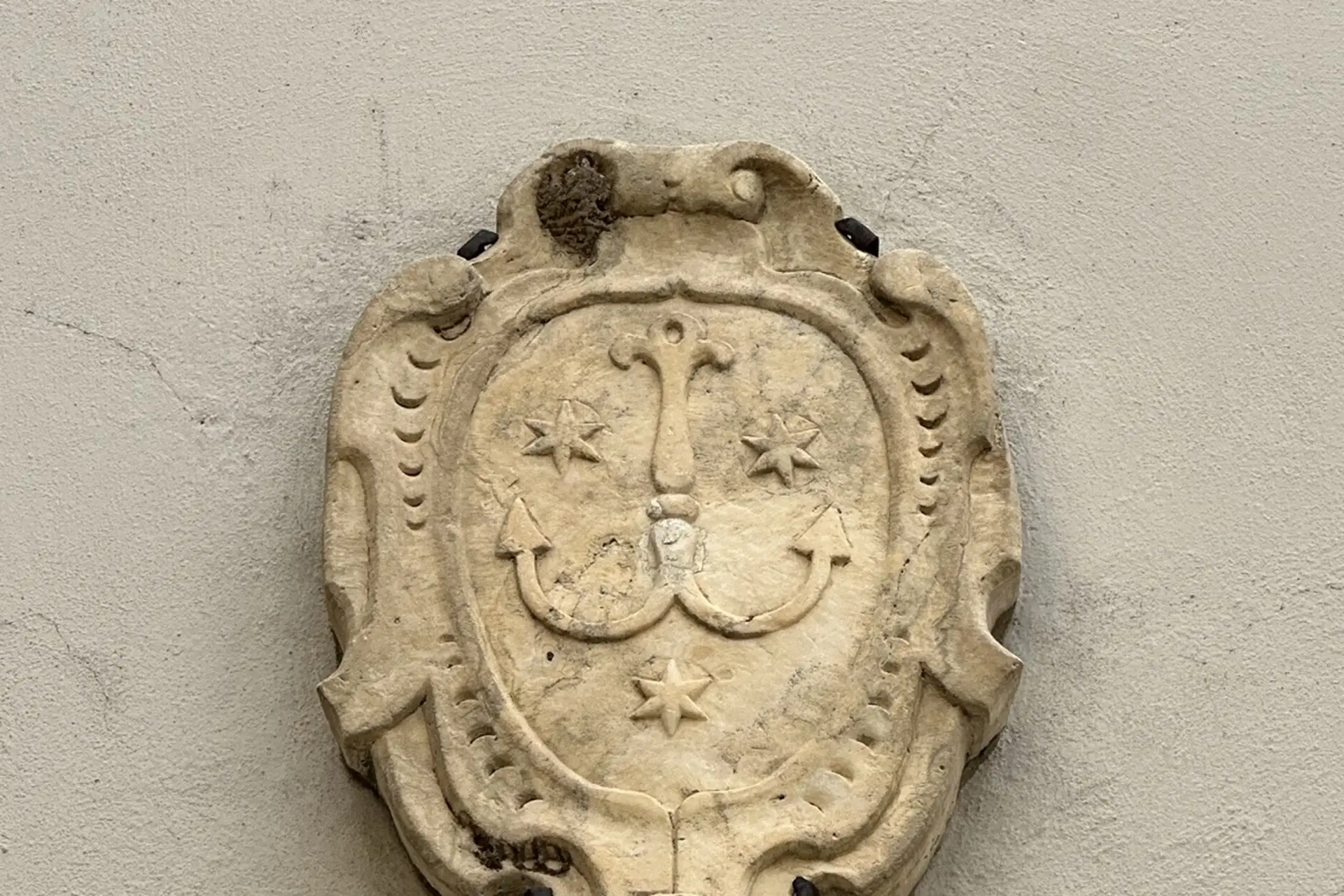
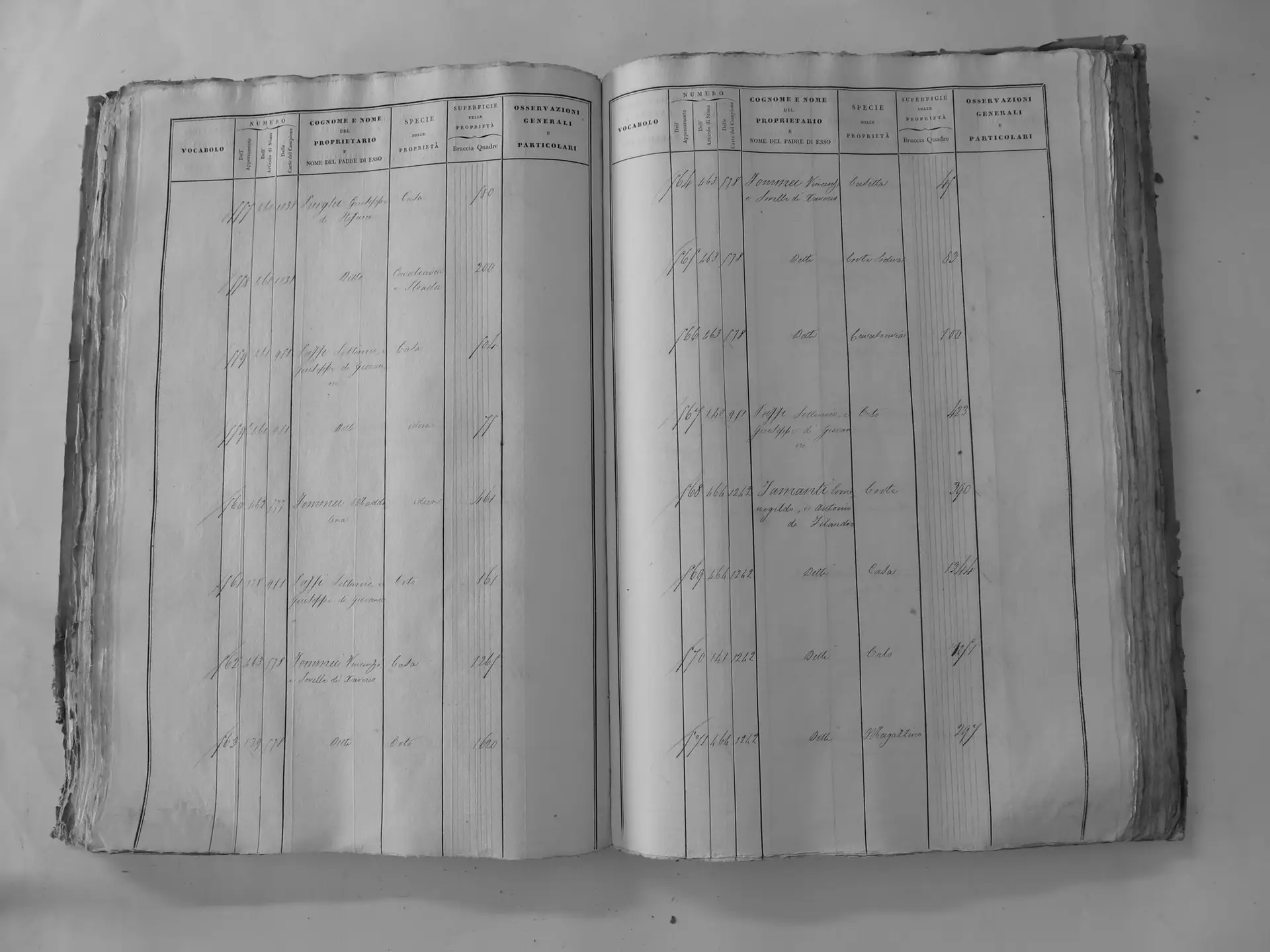
The house is older than the family’s secure presence in town. An old hearth carries the date MDX (1510) beside a later 1930. Above the entrance is a carved shield showing an anchor and three stars, the Tamanti arms. The same emblem appears inside the sanctuary of the Madonna del Soccorso, where Giacomo Tamanti and his wife Anna Mechini gave the right altar in 1699. Around 1835 the cadastre registered a town complex of courtyard, house, garden and storehouse, parcels 568–571, to the brothers Ermenegildo and Antonio Tamanti, sons of Filandro (Tavole indicative, Città di Montalcino, Tomo III p. 164). The owner identifies parcel 569 with the footprint of the whole palazzo, which was later divided. Today it is shared between two households, and one of them descends from the Tamanti.
Four threads
The family history divides naturally into four threads. Each one has its own section.
The family tree
This thread traces the line from Il Tempesta through Dr Jacomo Cosimo and Ermenegildo Gaetano to Filandro and his sons. It then follows the line through the nineteenth century to two soldiers of the twentieth, Giovanni and Gianni Tamanti, whose memorial is on the facade. Explore the Tamanti family tree.
Biondi-Santi
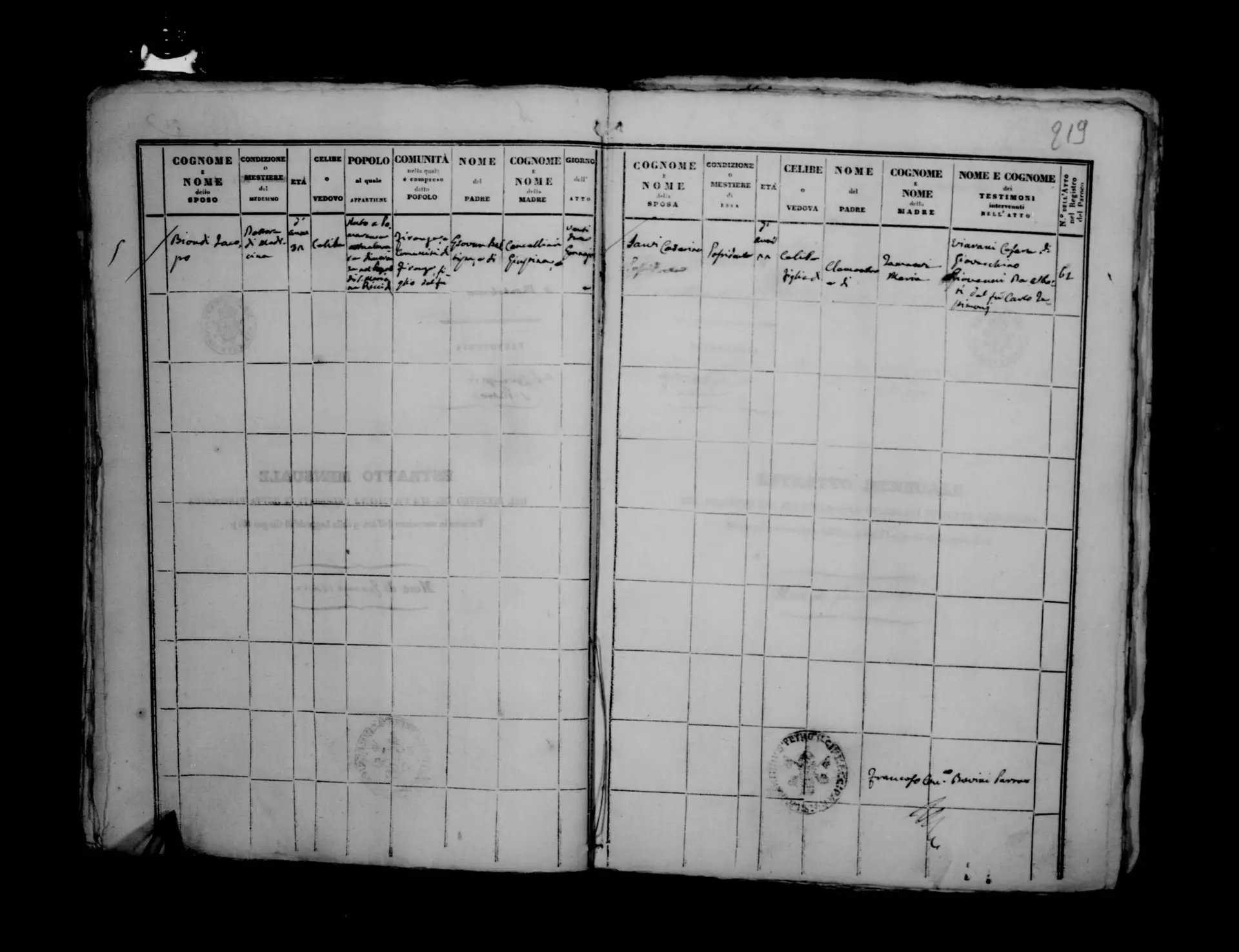
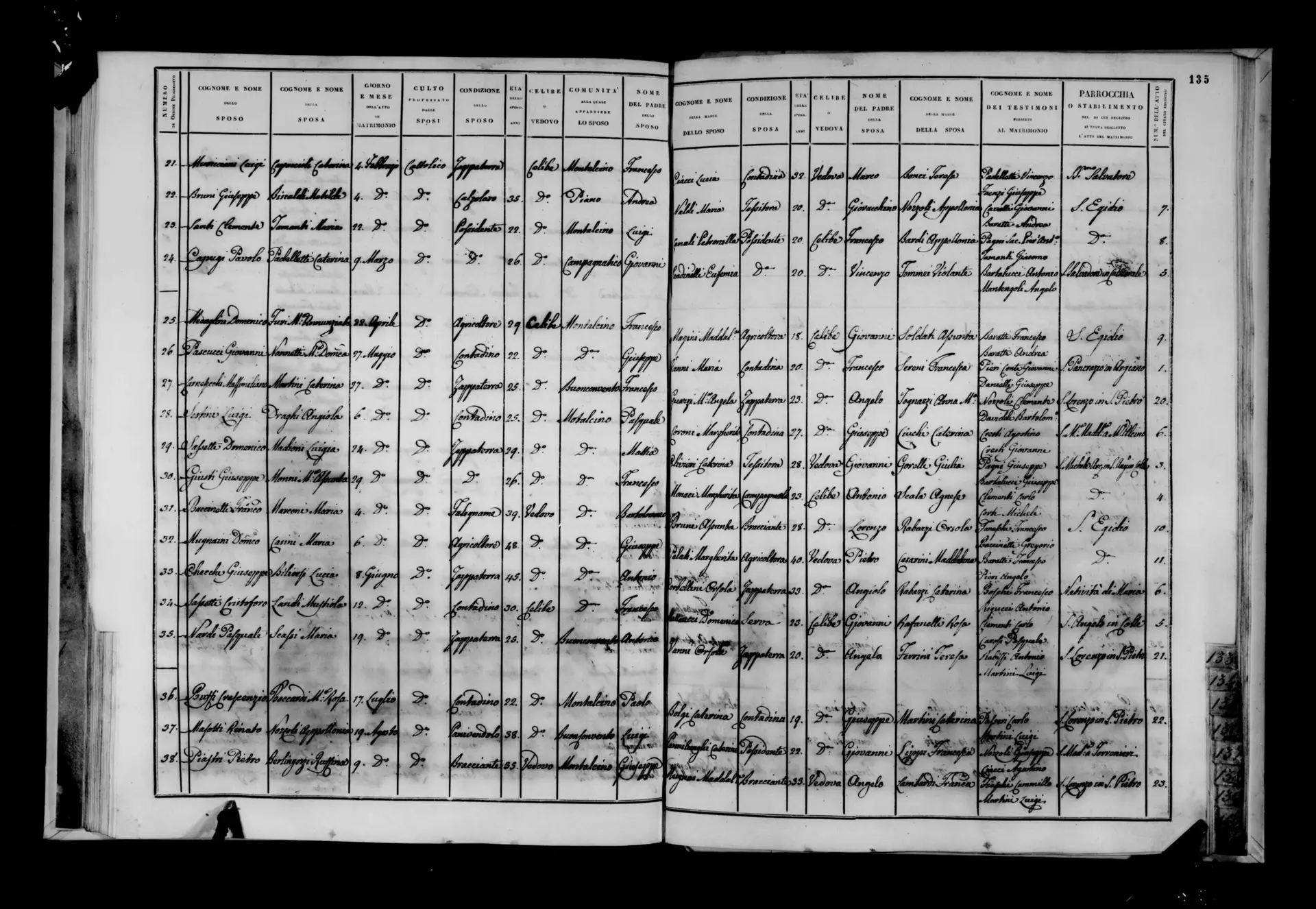
On 12 February 1819 Maria Tamanti, daughter of Dr Francesco Tamanti and Appollonia Bardi, married Clemente Santi (marriage act of 12 February 1819). In 1844 their daughter Caterina married Jacopo Biondi (marriage entry of 22 January 1844). Their son Ferruccio became the winegrower remembered as Ferruccio Biondi Santi. Carle’s tree has the two surnames the wrong way round; the civil records put them right. Read the Biondi-Santi story.
The Colombini connection
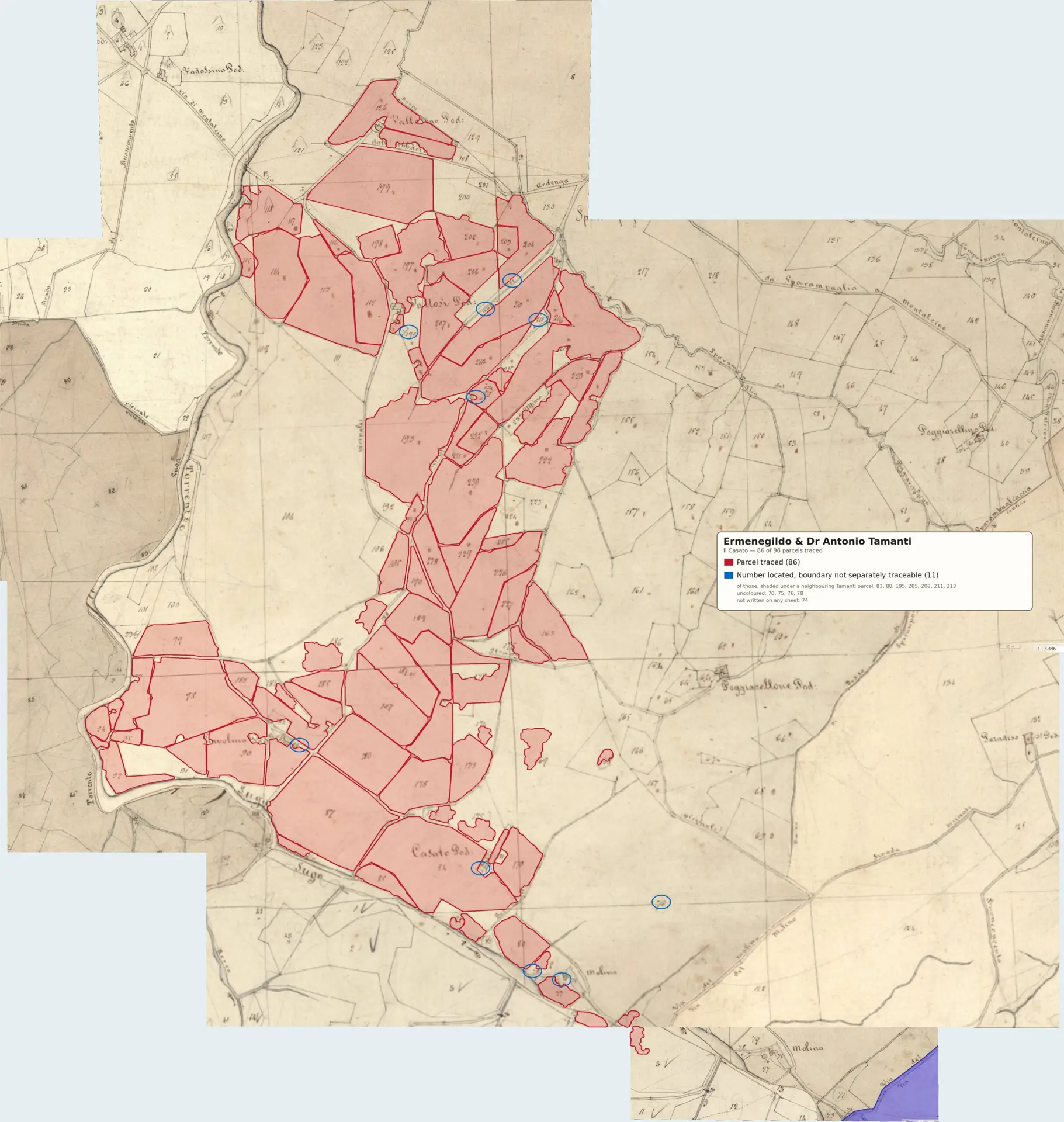
In the twentieth century Giuliana Tamanti married Giovanni Colombini. The marriage links the family to Fattoria dei Barbi and to the Casato estate. In 1820 the cadastre already recorded Casato as a 98-parcel holding of Filandro’s sons. Read about the Colombini connection.
The Tamanti poderi
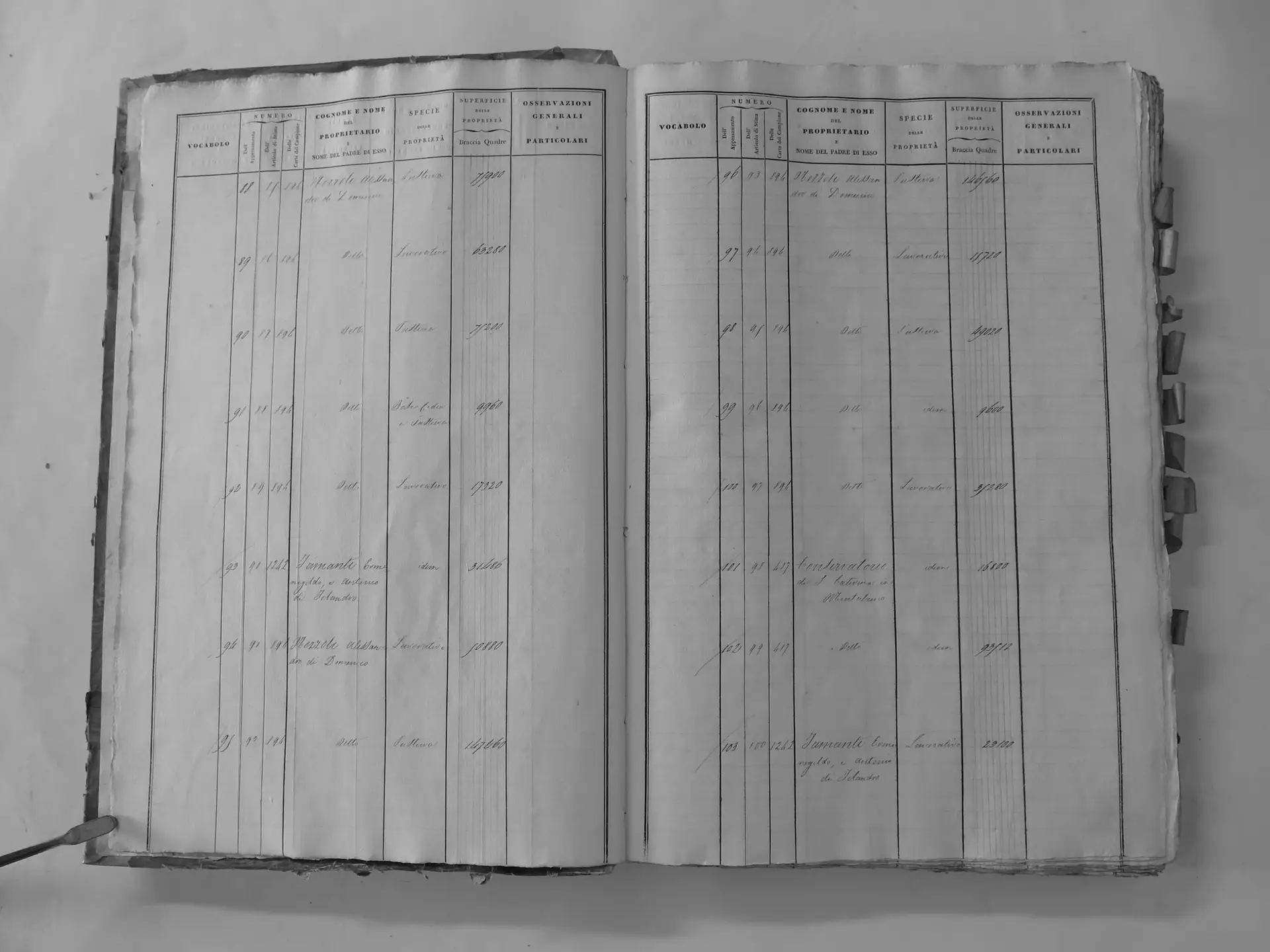
The family’s wealth lay in its land as much as in its town house. Their farms included Chiusa, Scarnaquoja, Pelagrilli and Il Casato, worked under the Tuscan mezzadria, or sharecropping, system. Some can be followed from the fiscal tables of 1692 to the cadastral ledgers of about 1820 (Tavole indicative, section A). Walk the Tamanti poderi.
How we treat the evidence
Every page in this section links its claims to the record behind them. Most are original scans hosted here, with links to the originals on the Italian state archives portal Antenati or on the Tuscan cadastral archive CASTORE. Published books are cited by author, title and page. Some identifications are strong but not yet proven, such as a name that matches in age and place but lacks a confirming act. Those are labelled as such. See the full sources and evidence.
Sources on this page
- Lucia Carle, La patria locale. L’identità dei Montalcinesi dal XVI al XX secolo (Regione Toscana / Marsilio, 1996), pp. 289–300
- Lucia Bonelli Conenna, Il contado senese alla fine del XVII secolo (Siena, 1990), pp. 162–166
- Mario Ascheri, “Montalcino nella storia: alle sorgenti del Brunello”, p. 37
- Don Antonio Brandi, Studi e Trascrizioni (1699 Madonna del Soccorso altar inscription)
- ASSi, Catasto Generale della Toscana, Montalcino, Tavole indicative, Tomo III p. 164 (Città di Montalcino, section V′); parcel identification by Luisa Scrivani (correspondence, 28 August 2026)
- Tavole indicative, Tomo I p. 9, section A: Ermenegildo and Antonio di Filandro (original on CASTORE)
- Reconstruction of Tamanti parcels at Il Casato (Sparampaglia), owner reconstruction from CASTORE
- Marriage of Clemente Santi and Maria Tamanti, 12 February 1819, S. Egidio, act 8 (original on Antenati)
- Marriage of Jacopo Biondi and Caterina Santi, 22 January 1844 (original on Antenati)