

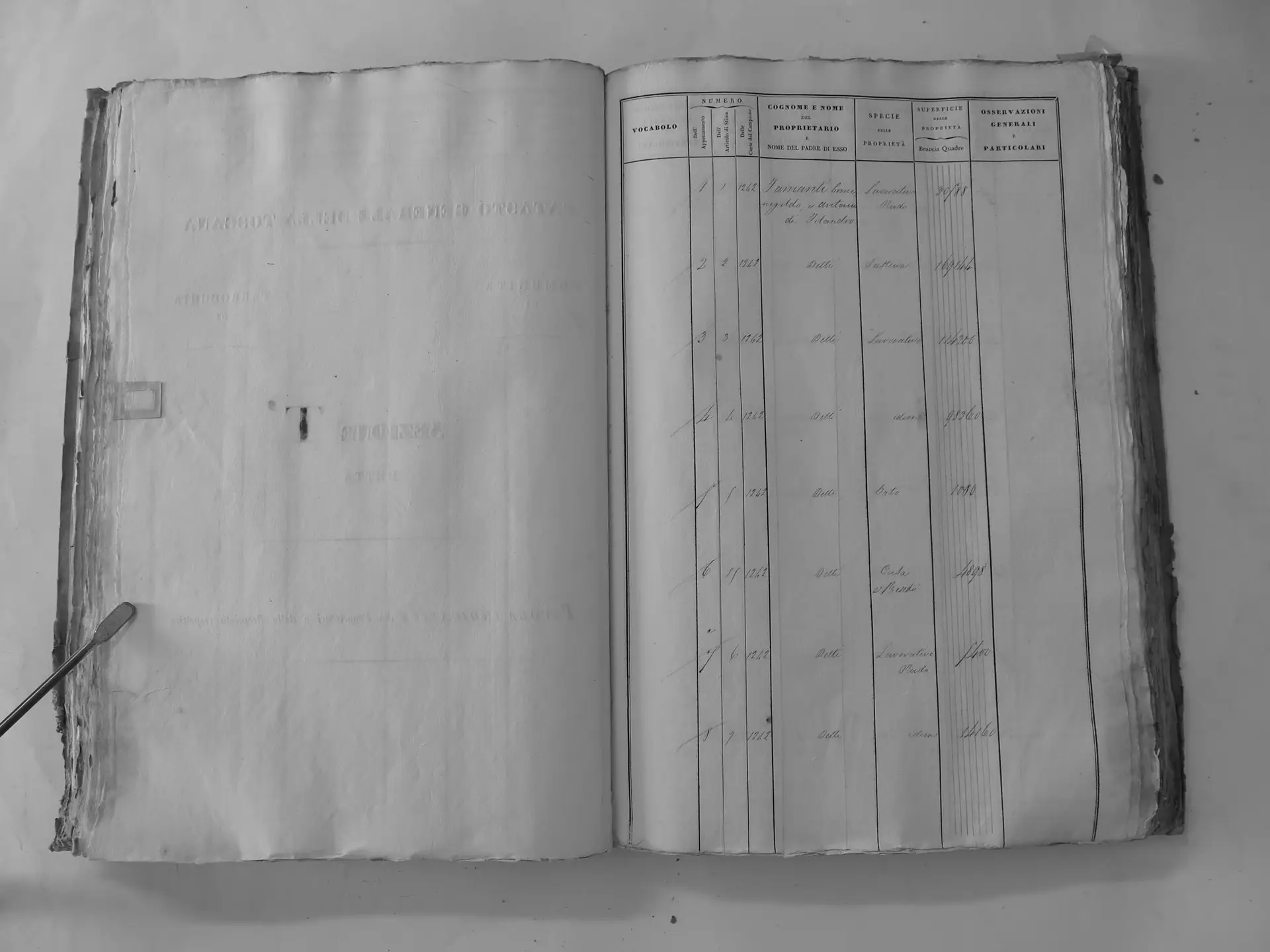
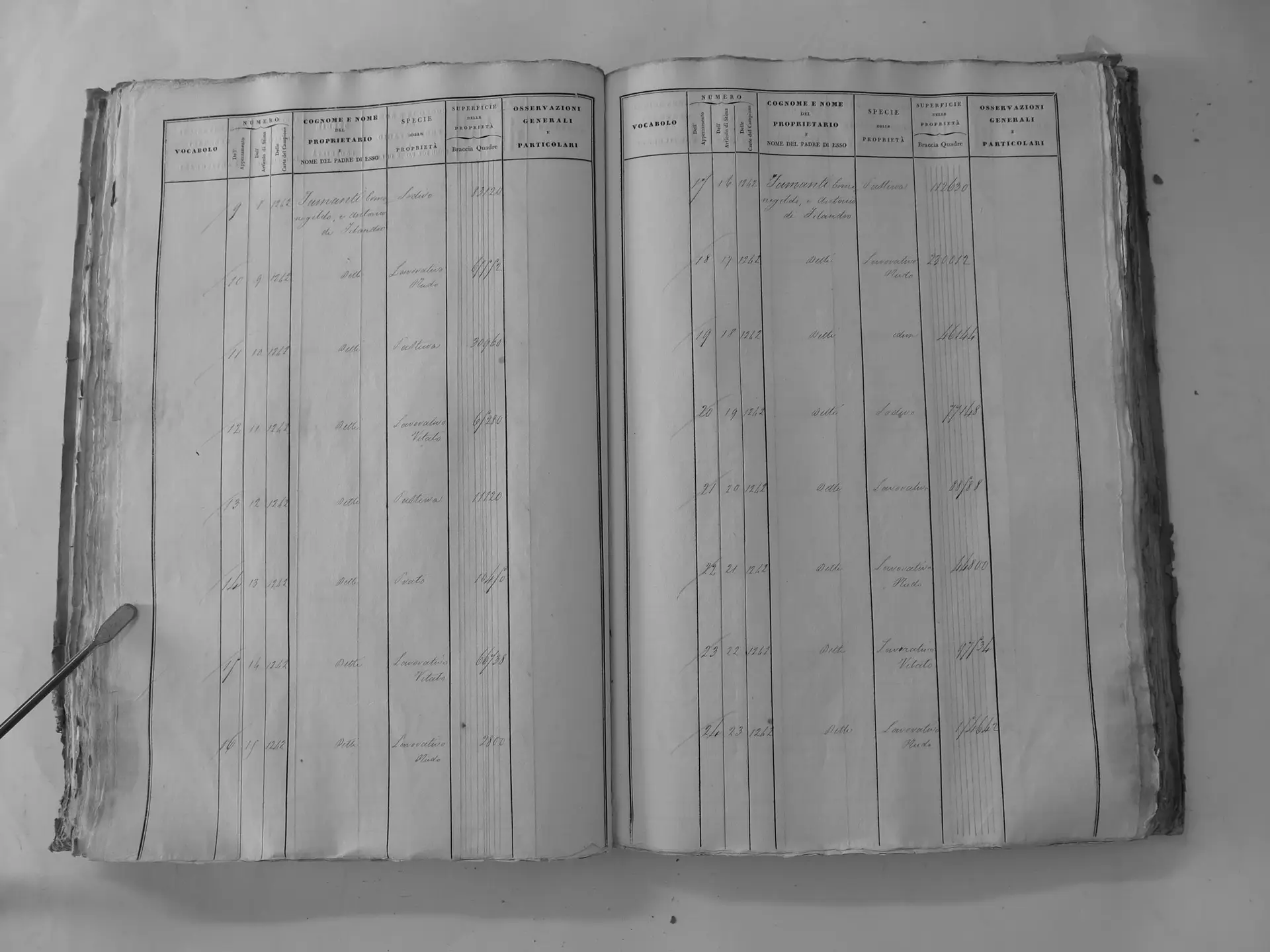
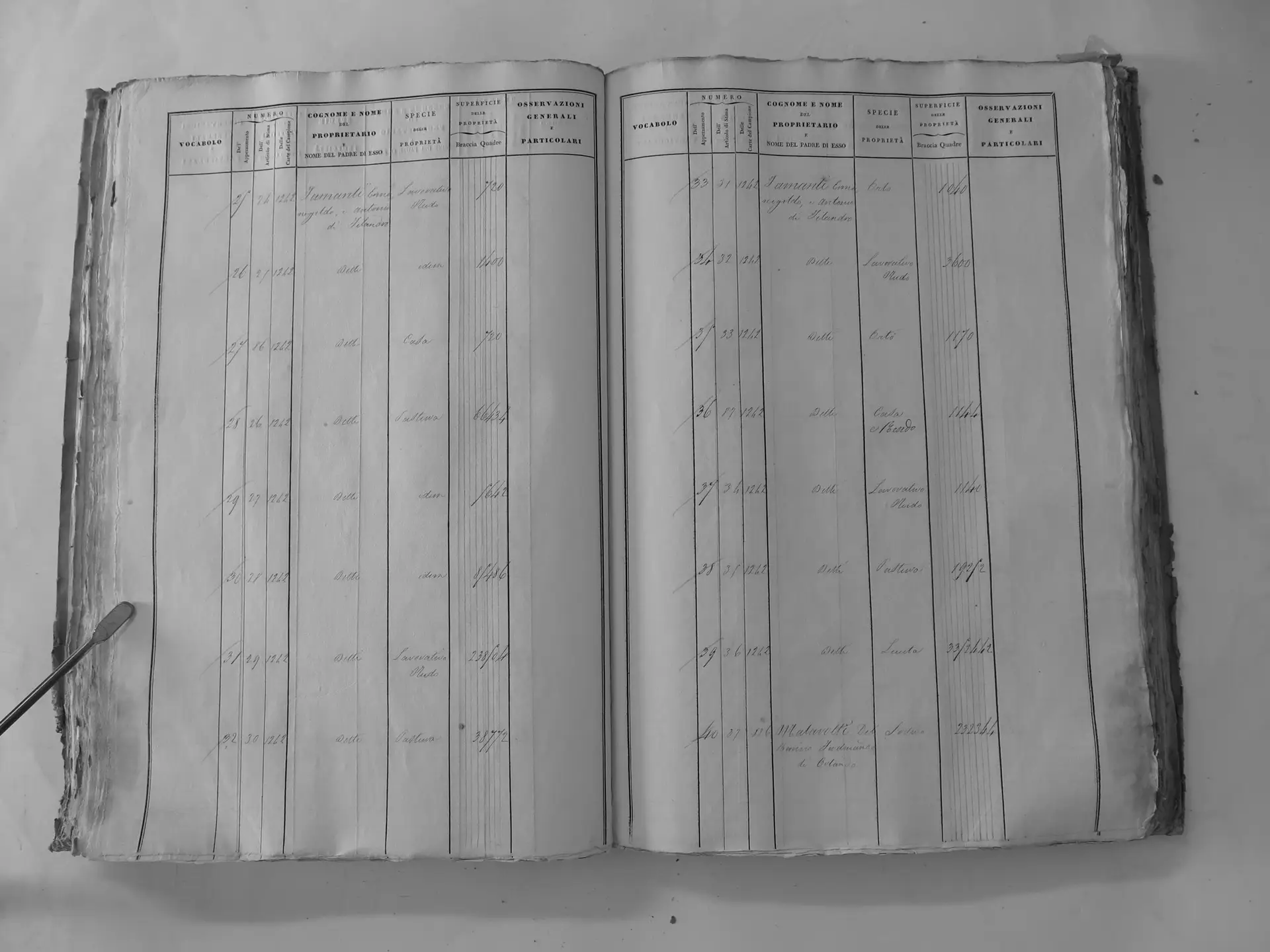
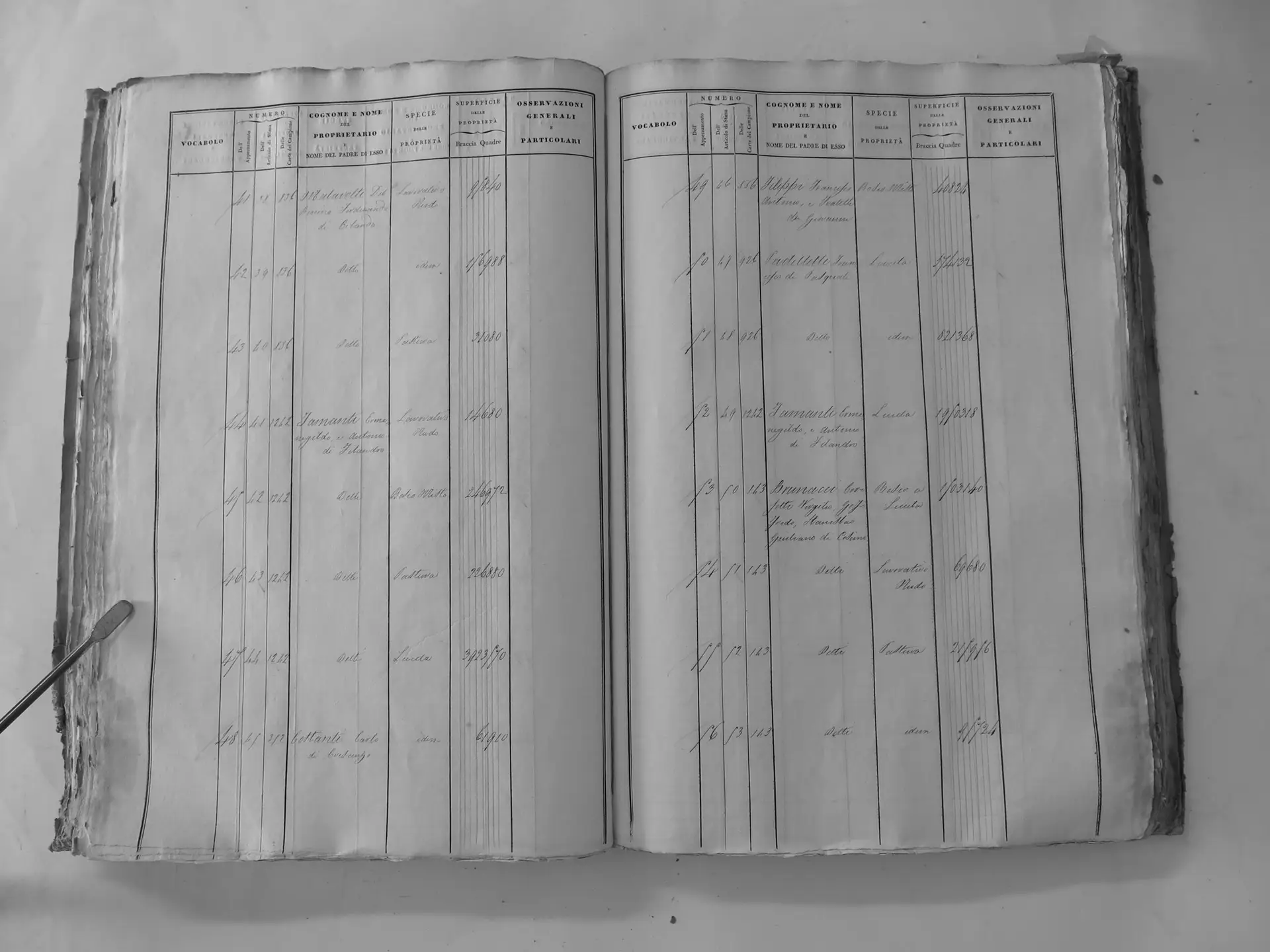
At Romitorio the Tamanti held almost an entire cadastral section. In the survey of about 1820, the owner table for section T′ attributes parcels 1 to 92, nearly every numbered parcel in it, to the brothers Ermenegildo and Antonio Tamanti di Filandro. The entries include two chapels, several houses and extensive holm-oak woods.
The 1820 record
The pages for this section are in Tomo III of the Tavole indicative (p. 90, p. 91, p. 92, p. 93, p. 94, p. 95, p. 96). No reliable hectare total has been calculated for the block yet. Even without one, the holding was among the brothers’ largest, alongside Il Casato and Pelagrilli.
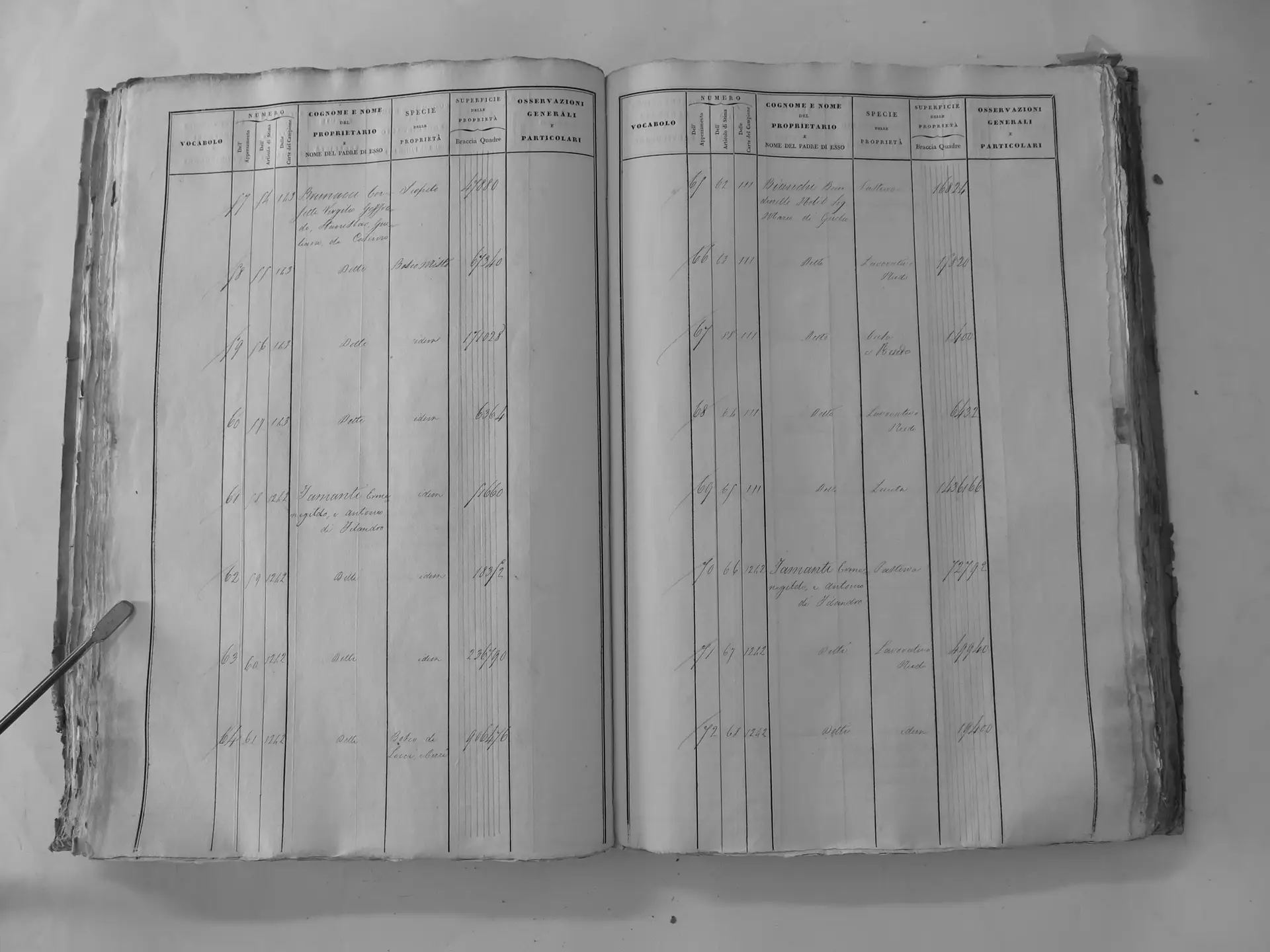
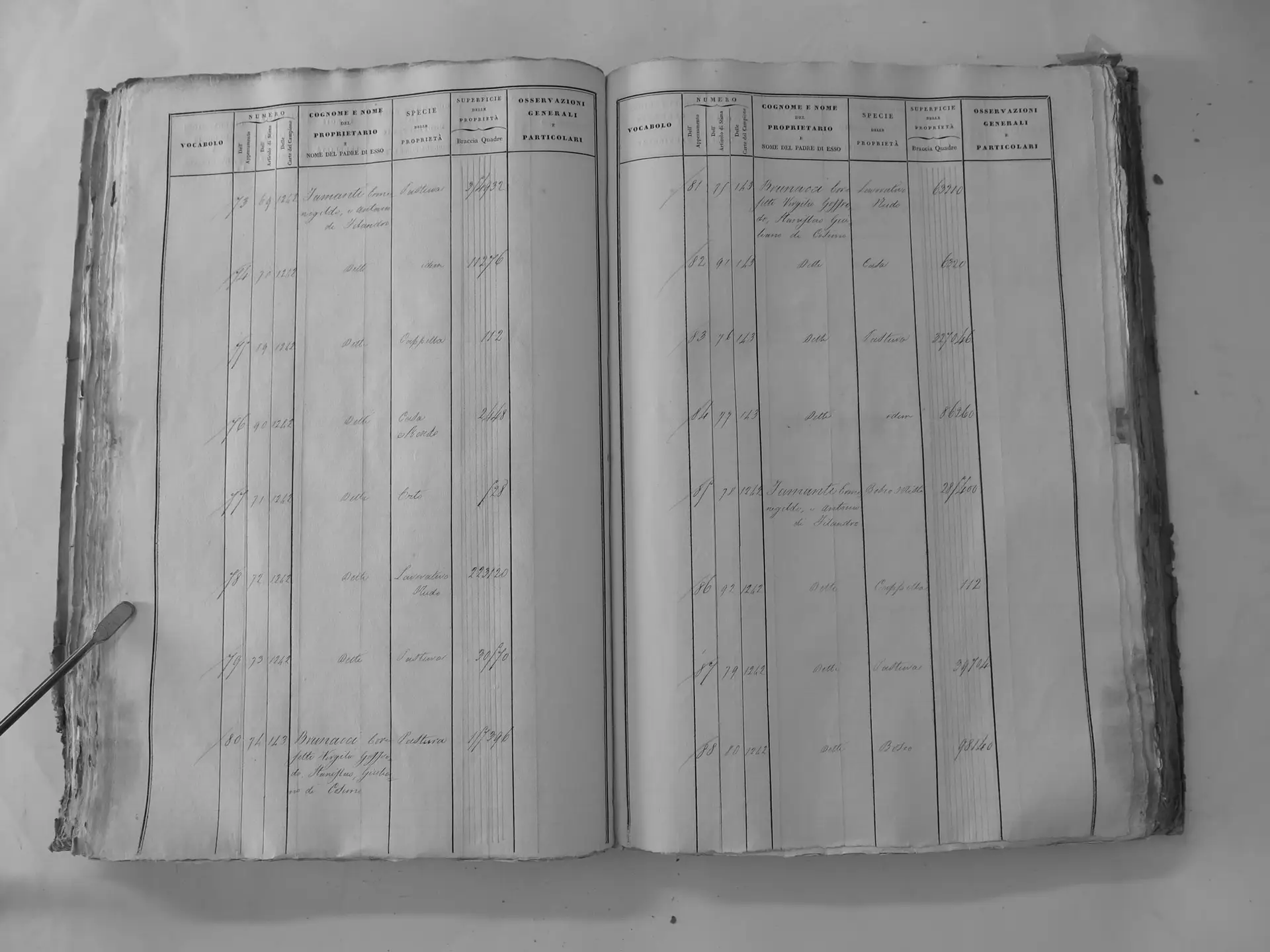
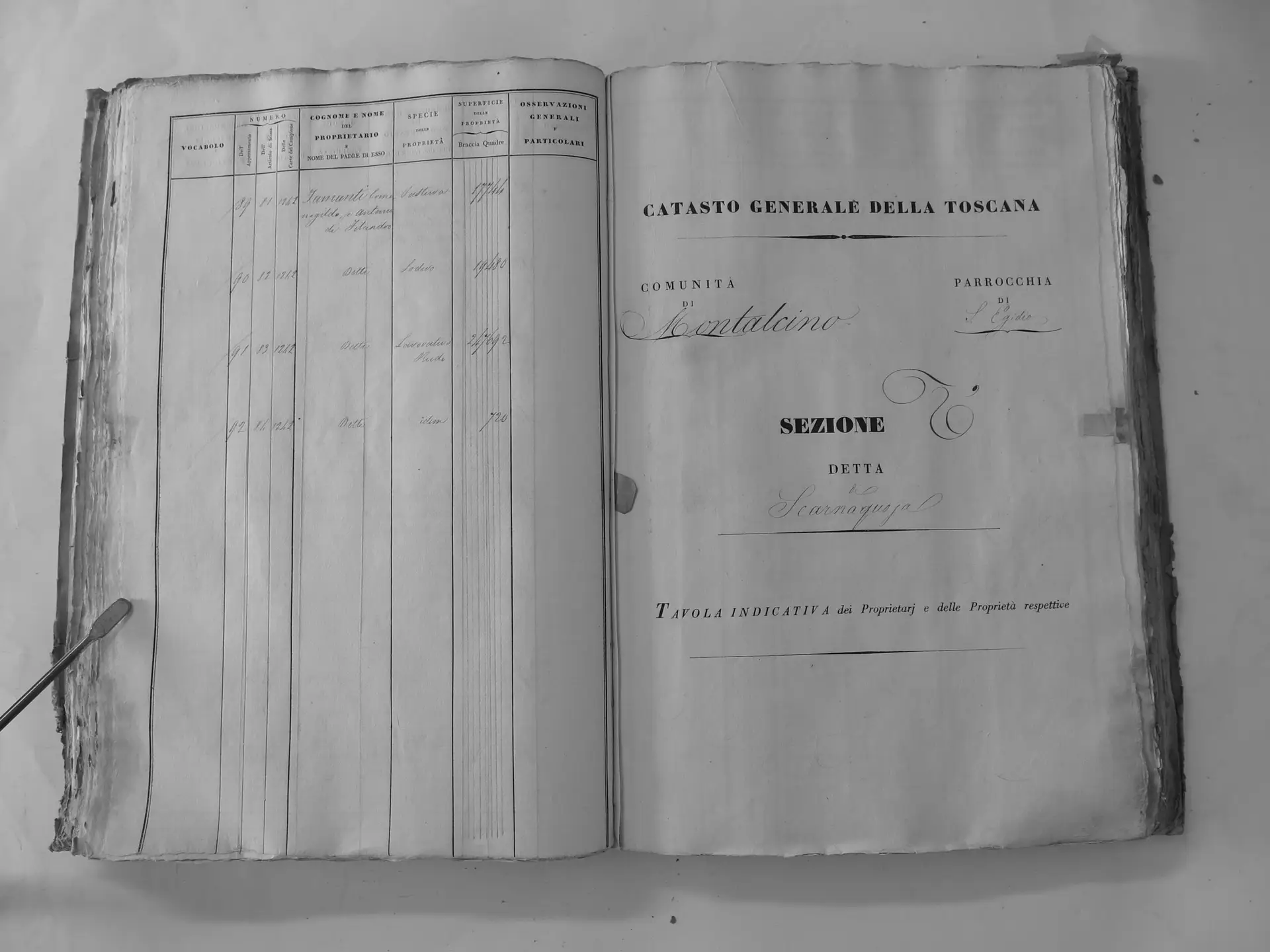
“Ora Tamanti”: a recent acquisition?
Two other records suggest how the land came to the family. The 1832 tithe register of the parish of SS. Salvatore lists “Romitorio” under “La Pergola Bargagli ora Tamanti”, meaning formerly Bargagli, now Tamanti. Don Antonio Brandi’s transcriptions also include material from 1808 about a Giacomo Tamanti described as owner of the Castello di Romitorio (Brandi, Studi e Trascrizioni). Which Giacomo that was, how his holding relates to the 1820 cadastre and the 1832 entry, and what “Castello” meant here are all still to be worked out. Retrieving the 1808 petition and its title evidence is on the research list.
Romitorio today
The locality is now home to the Castello Romitorio winery, which dates the artist Sandro Chia’s purchase to 1984 (Castello Romitorio, “Origins”). The old owner table places the Tamanti in the same named district. It does not show that the 1820 Tamanti owned the castle itself, or that any present vineyard matches an old parcel. Answering that would need the historic map overlaid on the modern one and the chain of ownership in between.
Sources on this page
- Catasto Generale della Toscana, Montalcino, Tavole indicative, Romitorio (section T′), Tomo III pp. 90–96 (CASTORE; linked above)
- Don Antonio Brandi, Studi e Trascrizioni (1808 Romitorio material; 1832 SS. Salvatore decimario)
- Castello Romitorio, “Origins“
- Brian Pasch, survey of the Montalcino owner tables and Tamanti–Santi sources table (September 2026)