

San Polo was the largest block of land in the Tamanti survey records that has been measured. Gaetano Tamanti di Francesco, the owner of Chiusa, held about 160 hectares in the San Polo section. That is well over half of his roughly 270 hectares across Montalcino.
What the owner tables record
In section G, San Polo, the owner tables list Gaetano’s parcels in four groups: 14–16, 65–88bis, 103–119 and 164–165. A “bis” number is a parcel added after the original numbering. (See the Tavole indicative, Tomo I p. 90, p. 93, p. 94, p. 95, p. 96, p. 97 and p. 100.)
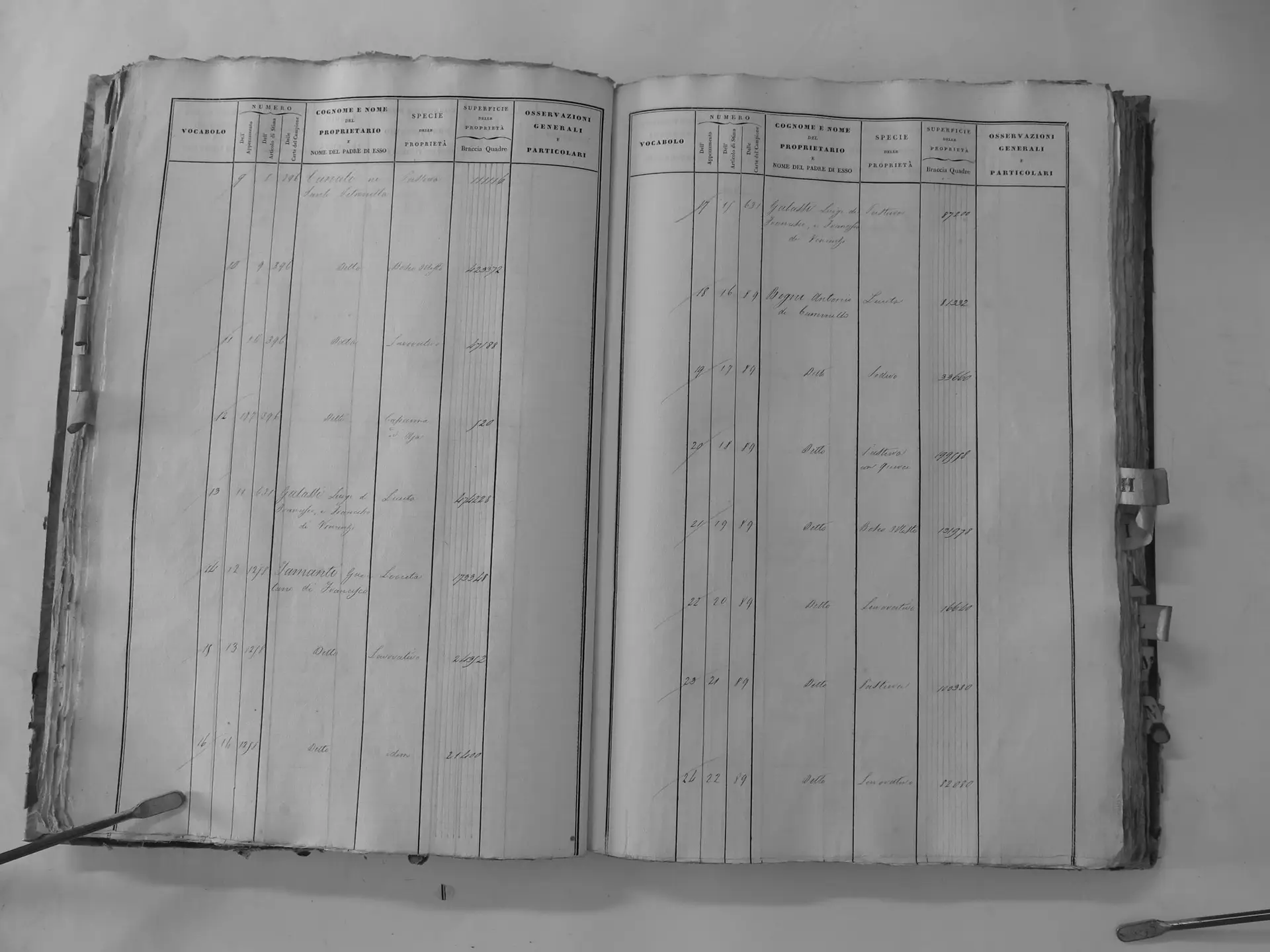
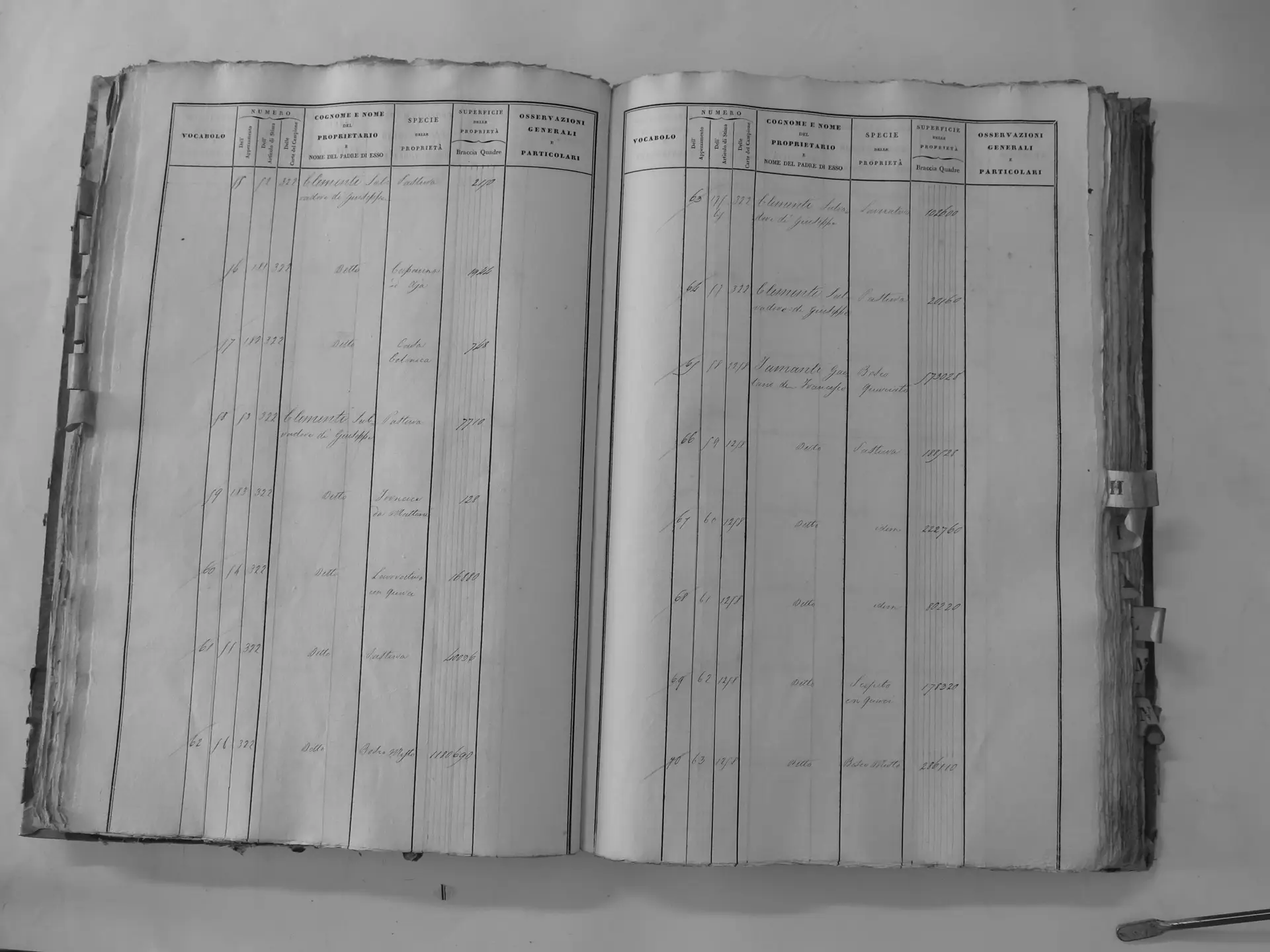
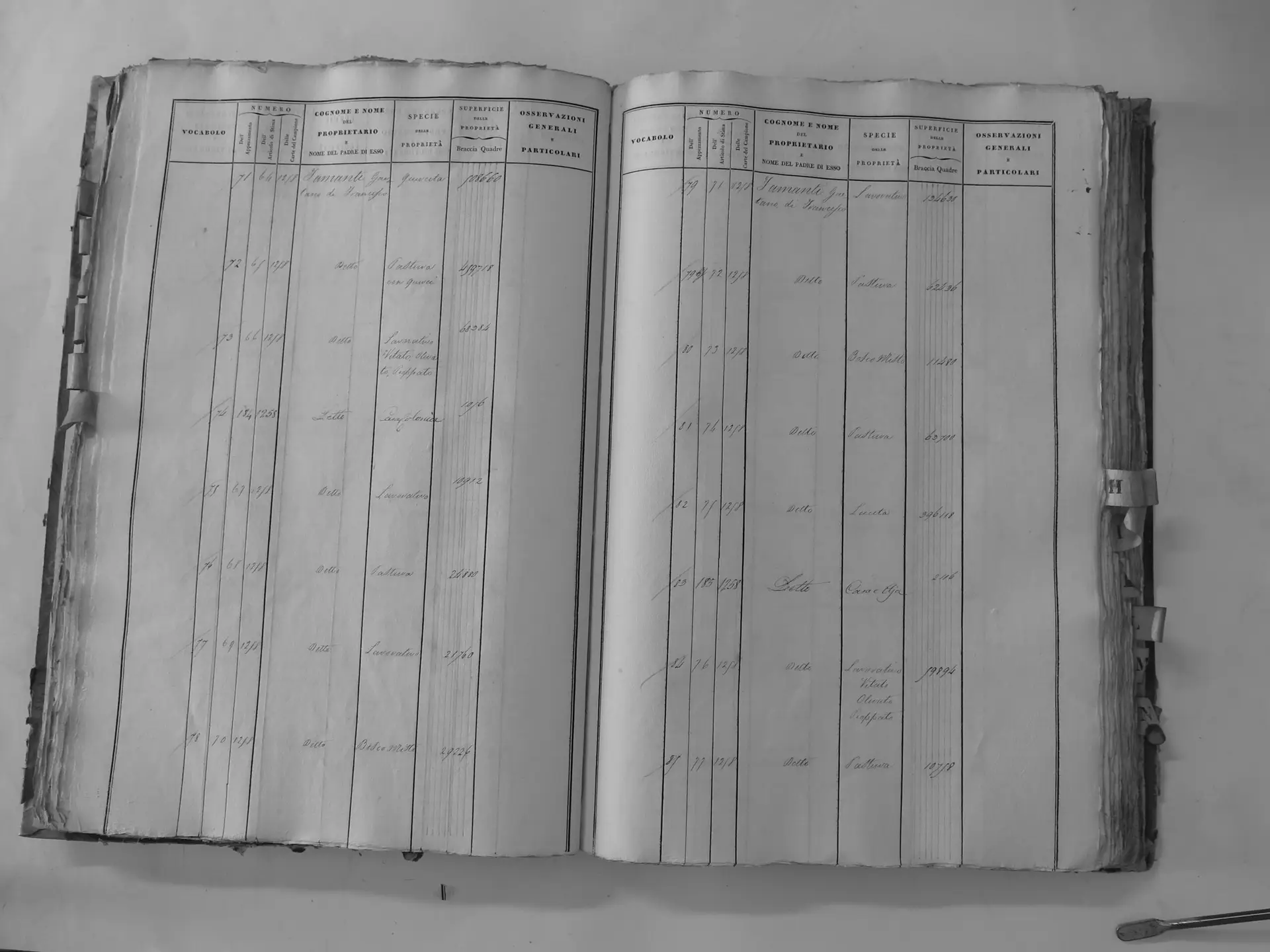
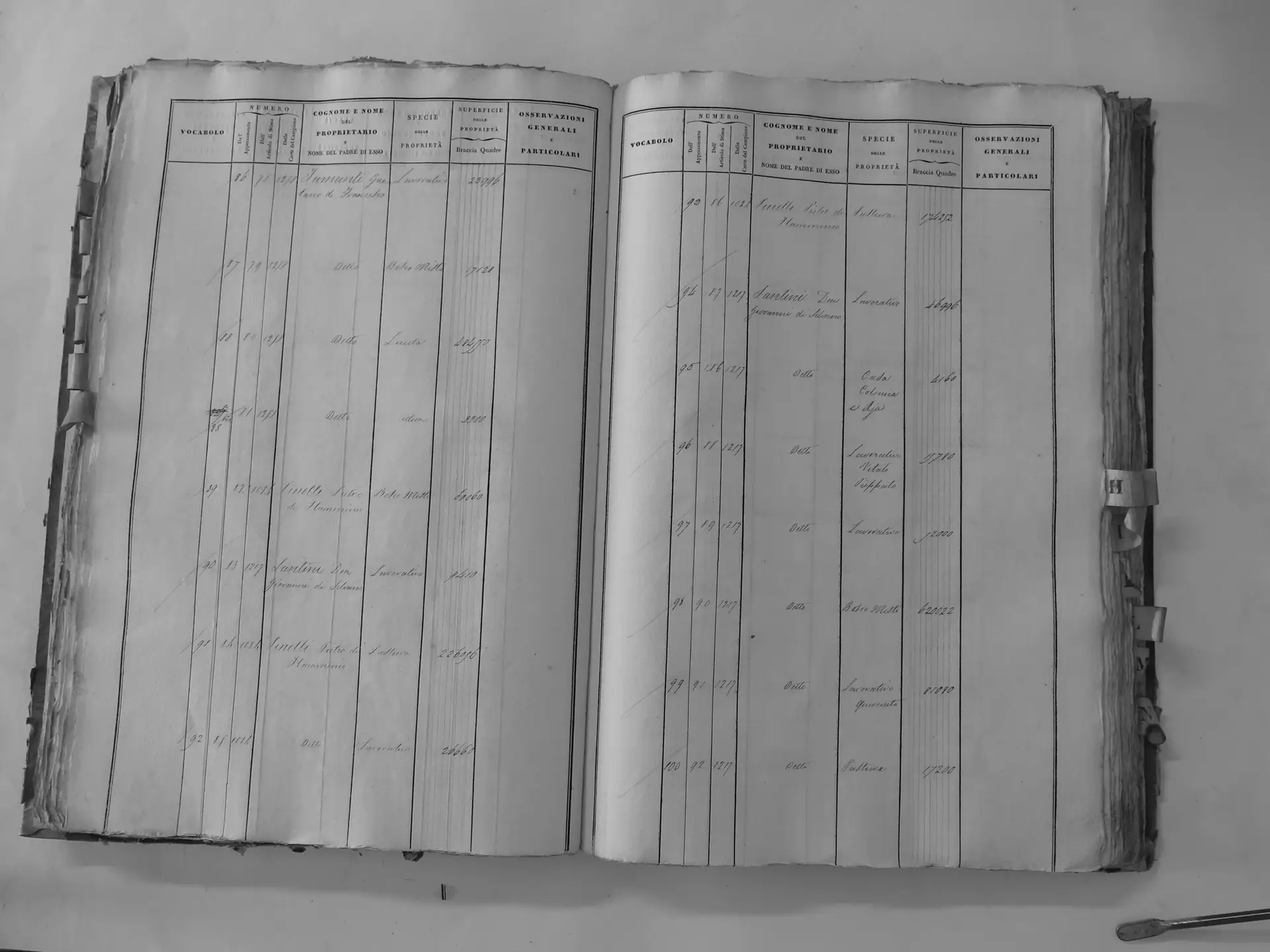
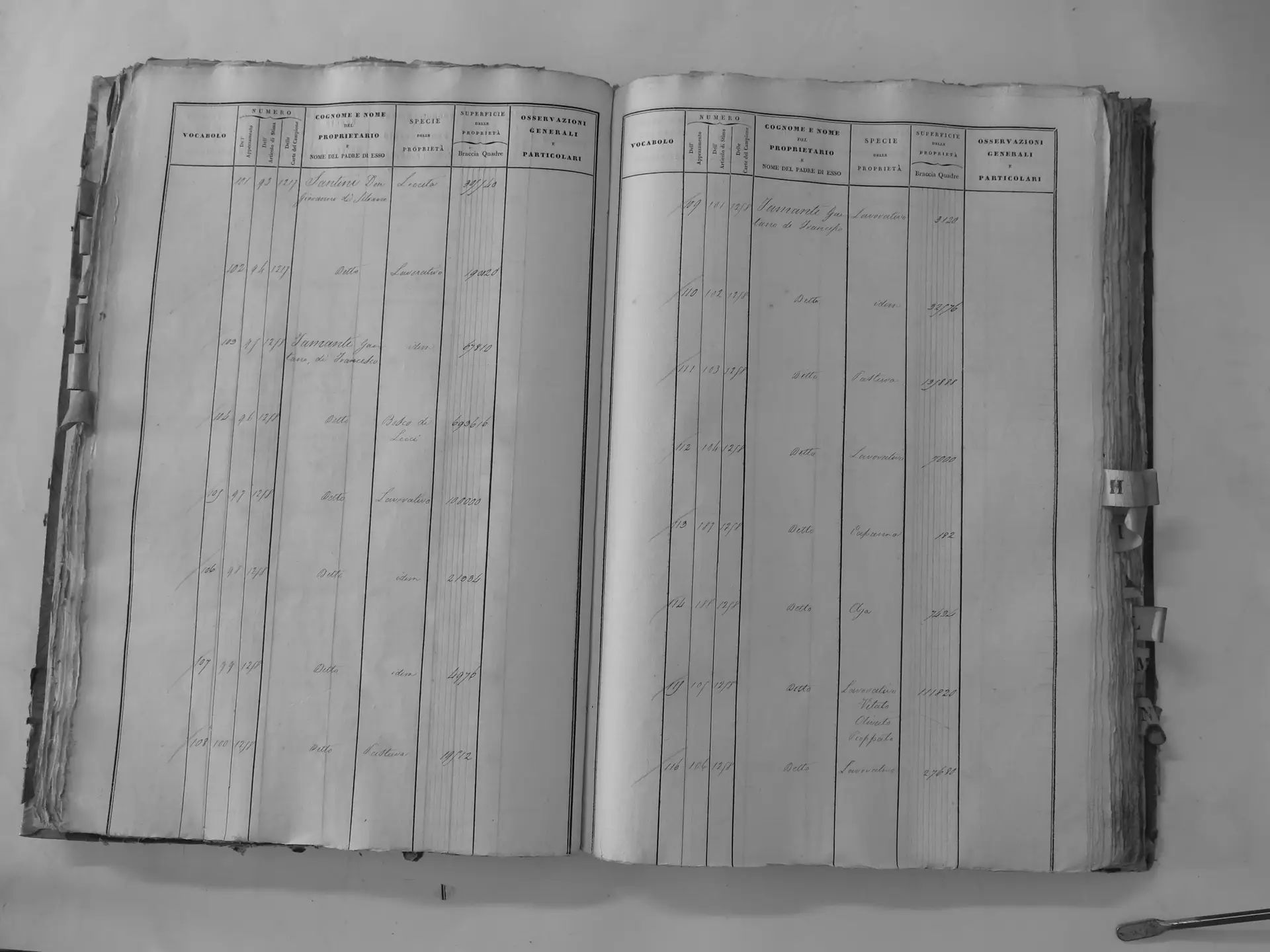
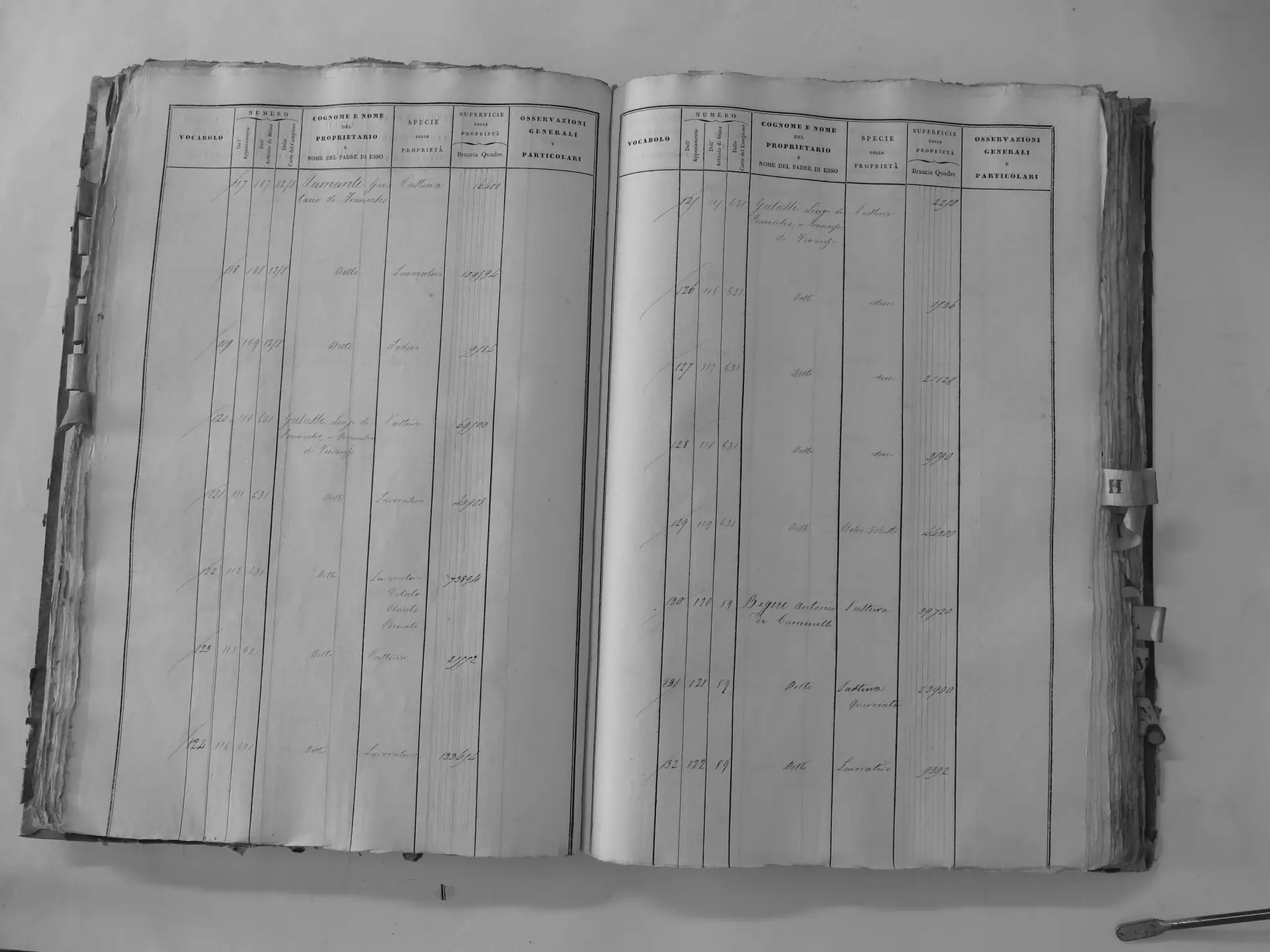
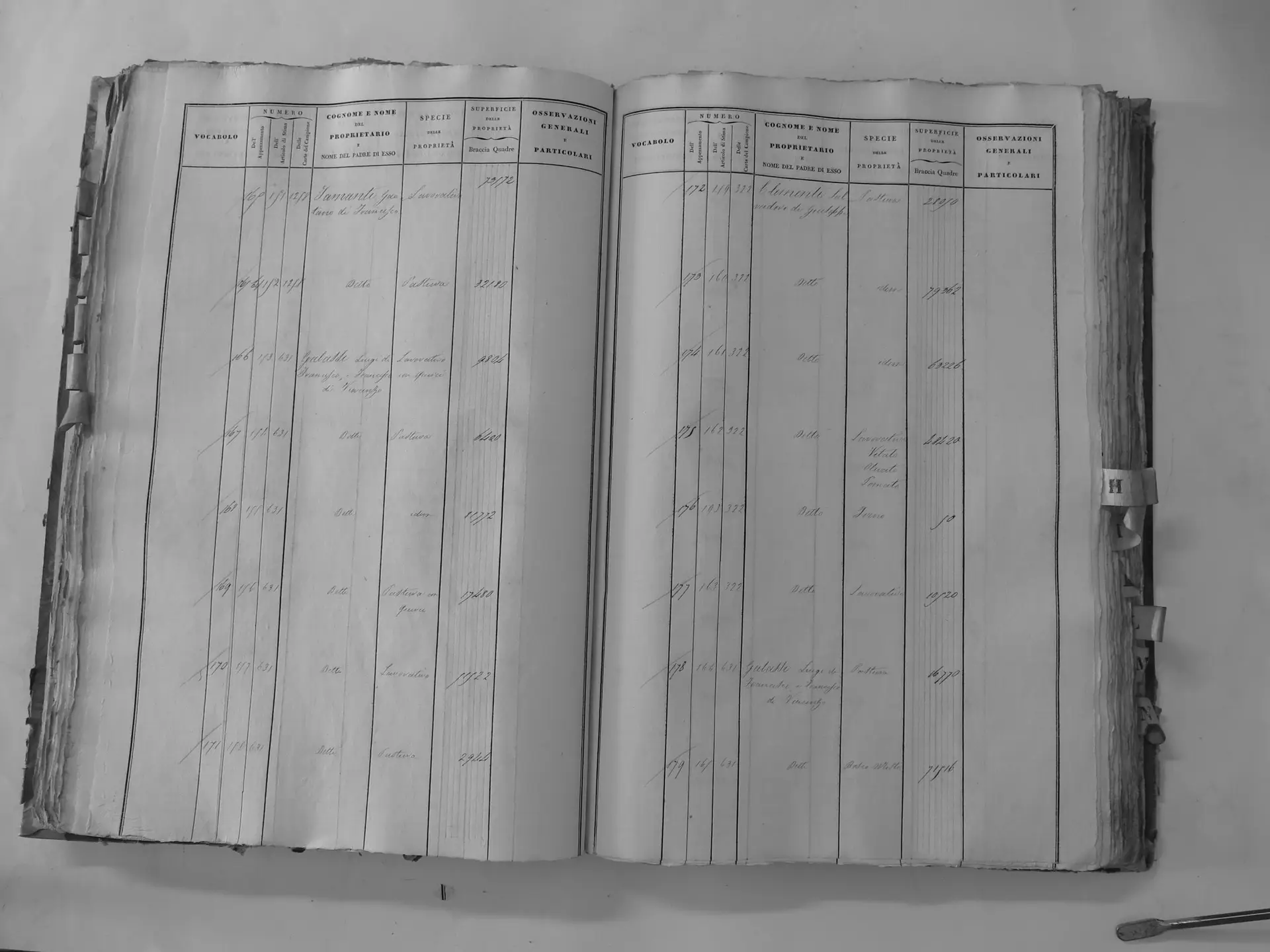
The entries describe a varied landscape: holm-oak woods and other woodland, grazing land, vineyards and olive groves, two farmhouses and a threshing floor. Two farmhouses suggest more than one working farm. The records reviewed so far do not name the farms, and this page does not guess at them.
How big is 160 hectares?
The figure is Brian Pasch’s approximate total for the whole section, converted from the survey’s square braccia at about 0.34 m² each. It is not a measurement of any single farm, and parts of the handwriting and arithmetic were difficult to read. Even so, it makes San Polo Gaetano’s main rural holding. His Chiusa farm at Scarnaquoja, better known because of Le Chiuse, was about 18 hectares.
Santi neighbours
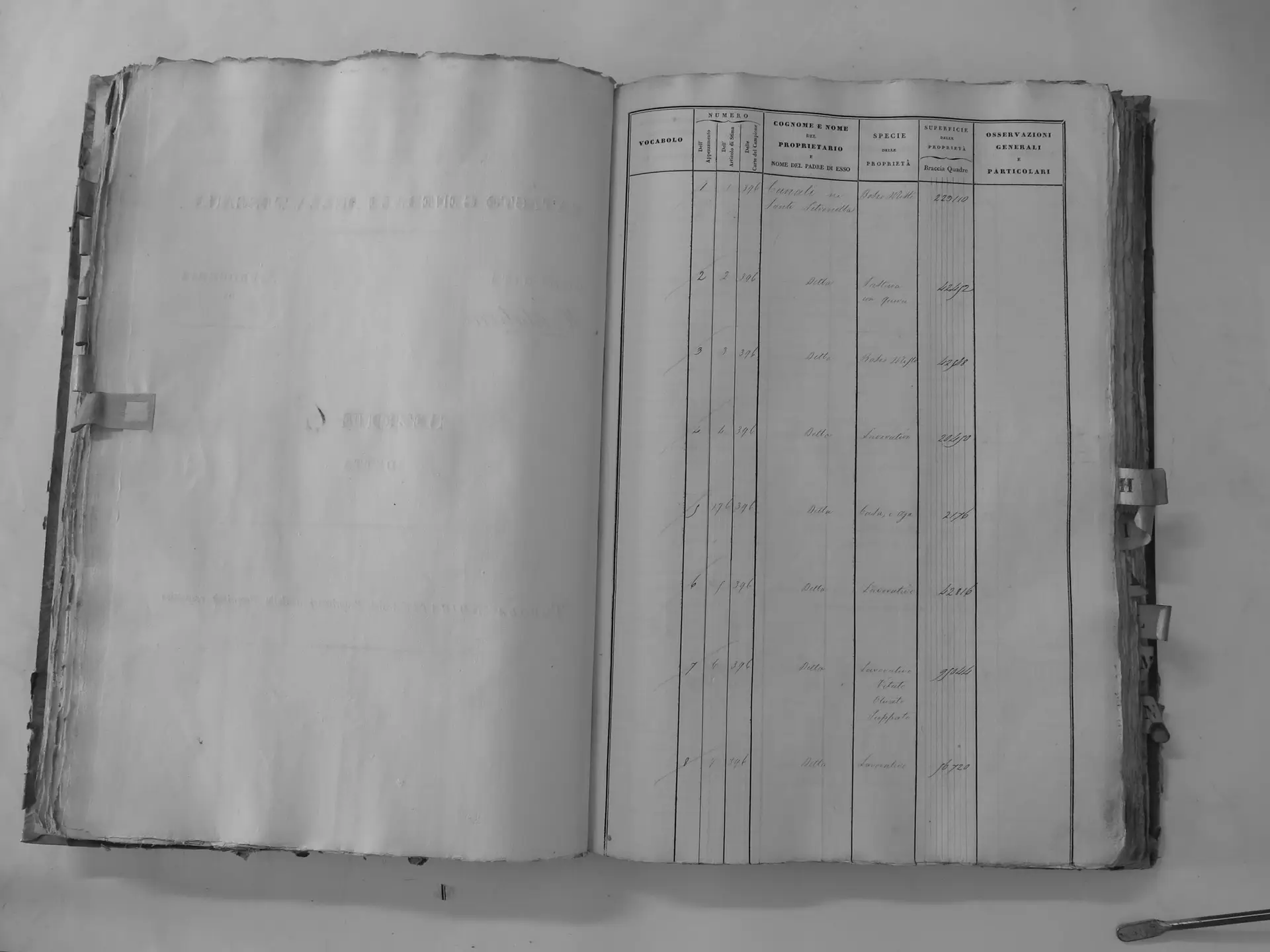
The same section also records land held by Petronilla Canali ne’ Santi, the mother of Clemente Santi, who married Gaetano’s sister Maria in 1819. She held parcels 1–12, about 38 hectares with a house, threshing floor, woods and vines (Tomo I p. 89, p. 90). Hers is a separate Santi account. Having neighbouring land does not show that any parcel passed between the two families. The Santi holdings are covered in the Biondi-Santi connection.
What is still open
Gaetano’s ledger account (Campione page 1258) should show how he came to own San Polo, whether as part of Dr Francesco’s estate or by purchase, and what happened to it after his will of 1847 (Carle, La patria locale, 1996, p. 296). The names of the two farms should also appear in the Campione or in later tithe registers.
Sources on this page
- Catasto Generale della Toscana, Montalcino, Tavole indicative, San Polo (section G), Tomo I pp. 89, 90, 93–97, 100 (CASTORE; linked above)
- Brian Pasch, survey of the Montalcino owner tables and Tamanti–Santi sources table (September 2026)
- Lucia Carle, La patria locale (1996), p. 296