

Of all the Tamanti lands, Chiusa is where the record reaches furthest and survives best. A farm of that name was linked to the Tamanti in 1692. In the survey of about 1820, a house and its fields there belong to Gaetano Tamanti. In 1840 Gaetano asked the bishop’s permission to build a family burial chapel on “his” Chiusa. Today the property is Le Chiuse, a working Brunello estate with a small deconsecrated chapel.
The 1820 record: a house and its fields
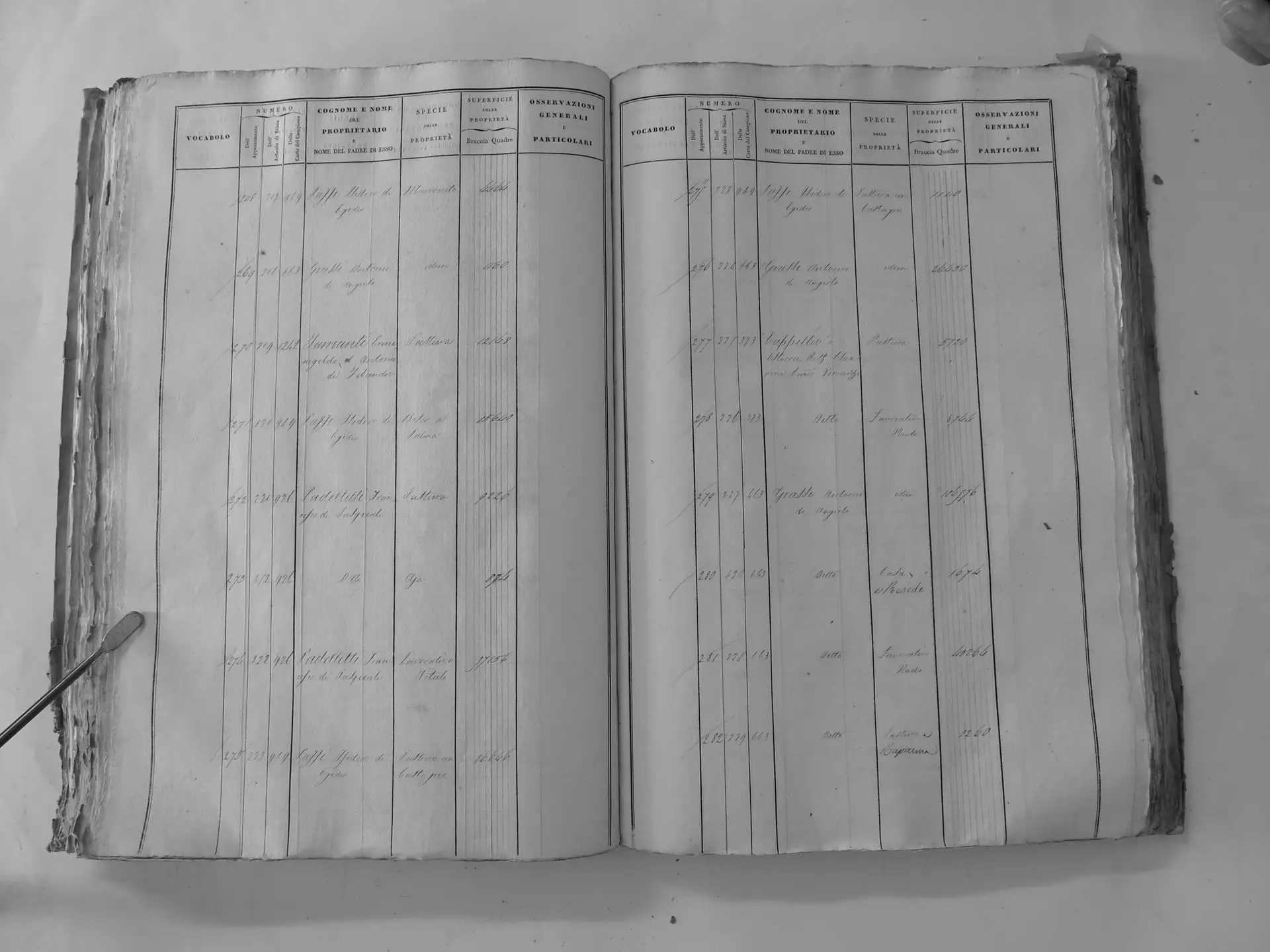
Chiusa lies in the cadastral section of Scarnaquoja (section U′). Its owner table is unusually plain. Parcel 59 is a Casa (house) under “Tamanti Gaetano di Francesco.” Parcel 60 continues the same owner with the word “Detto” (“the same”) and is recorded as lavorativo, vitato, olivato: worked land with vines and olives. Parcel 61 is lavorativo nudo, bare arable land, and parcel 62 is lavorativo vitato, arable land with vines. (See the Tavole indicative, Scarnaquoja, Tomo III p. 101, p. 108 and p. 123.) Read in order, these entries describe a single farm: a house surrounded by mixed fields, vines and olives, typical of the Montalcino countryside before vineyards became the main crop.
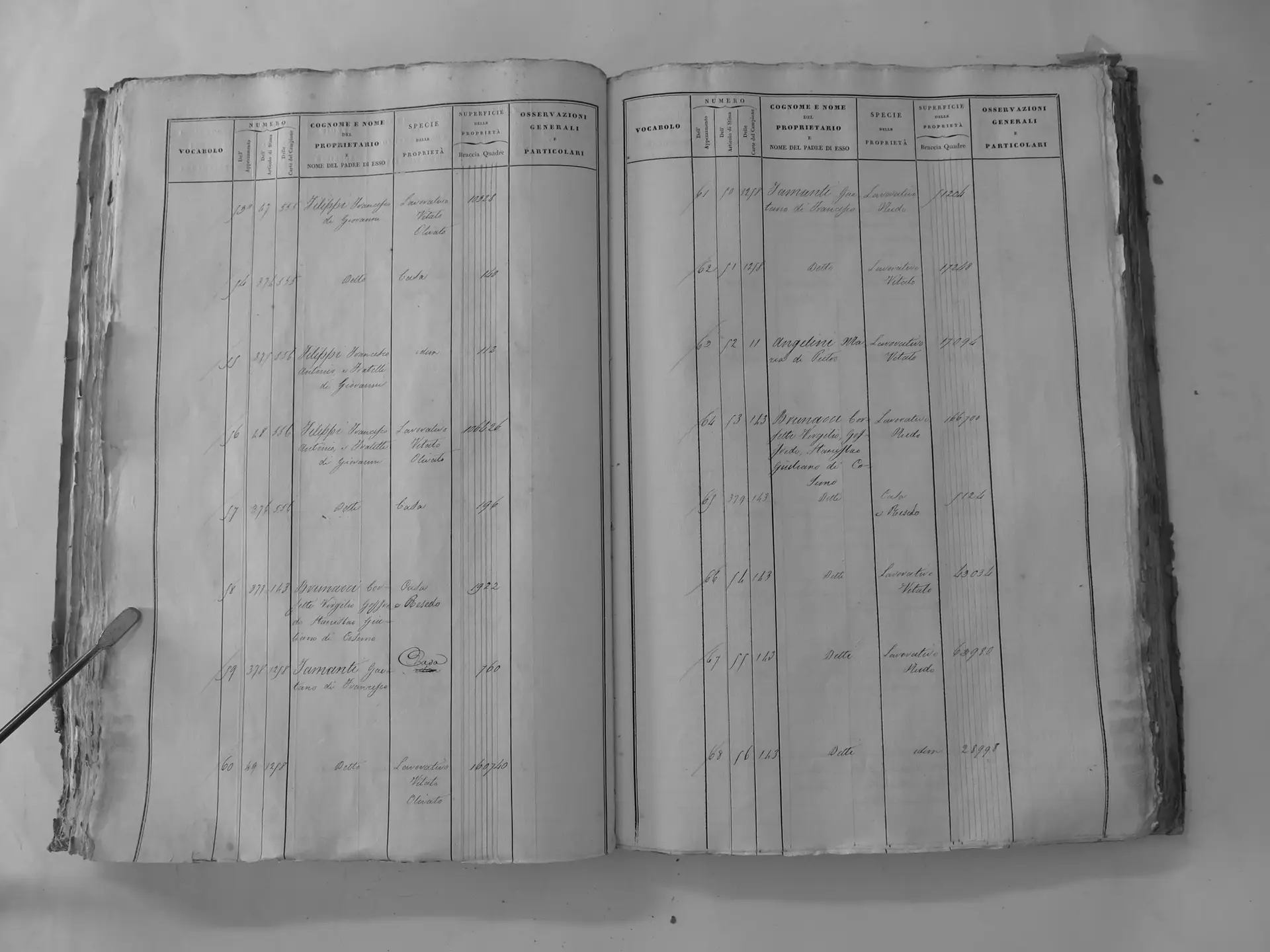
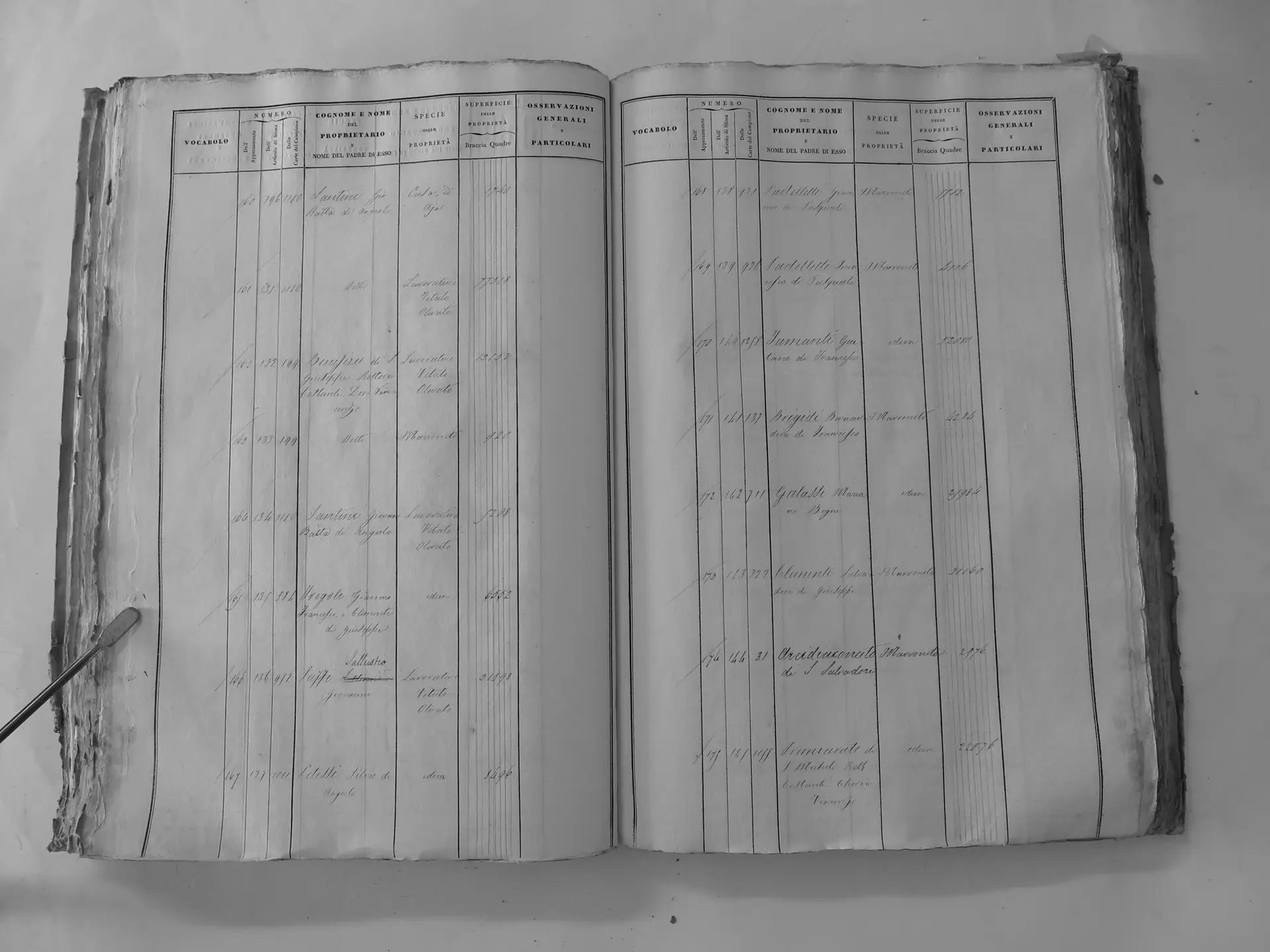
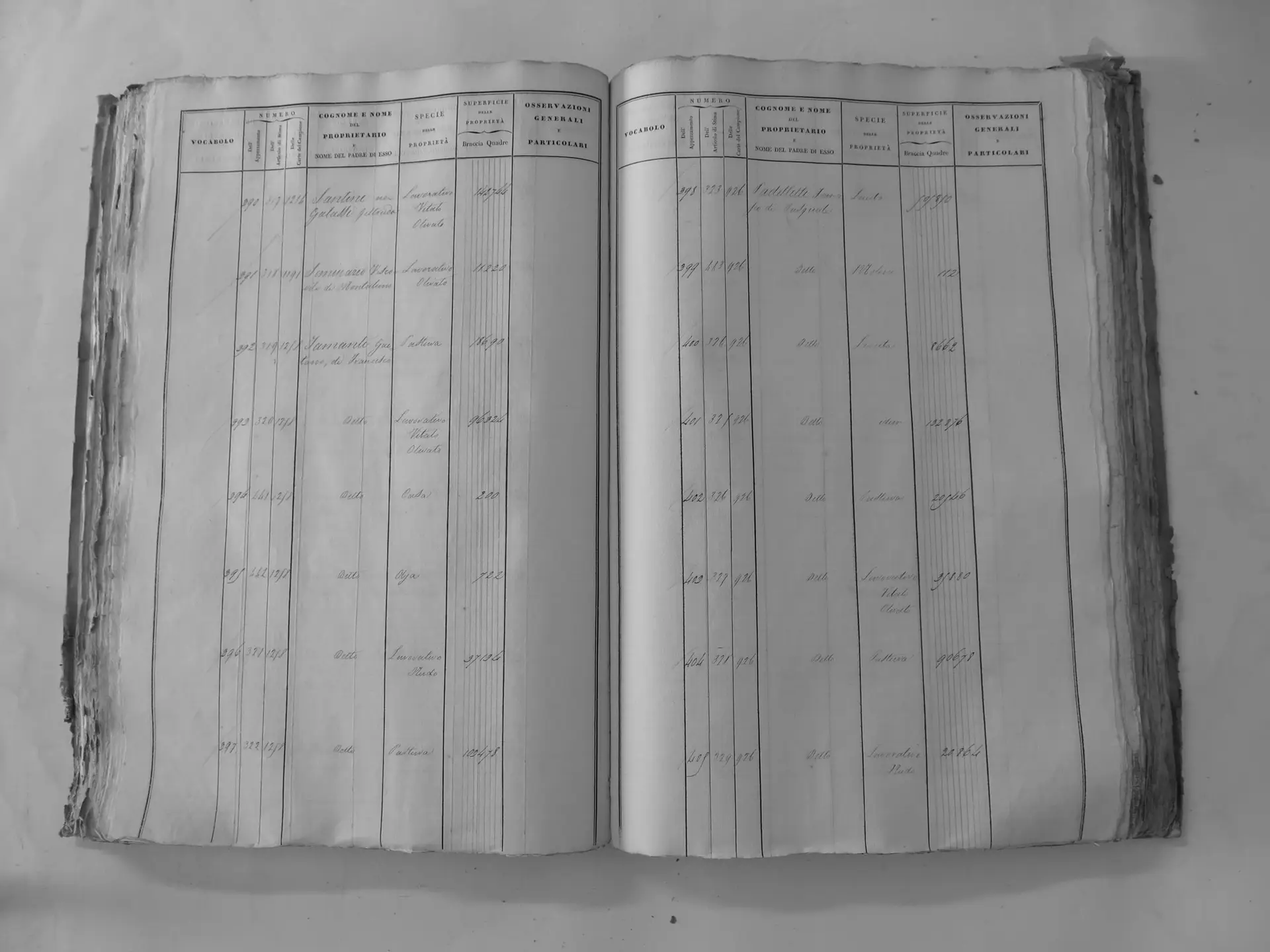
Gaetano’s full Scarnaquoja account also includes parcel 170 and parcels 392–397. In all it comes to about 18 hectares, with two houses and a threshing floor.
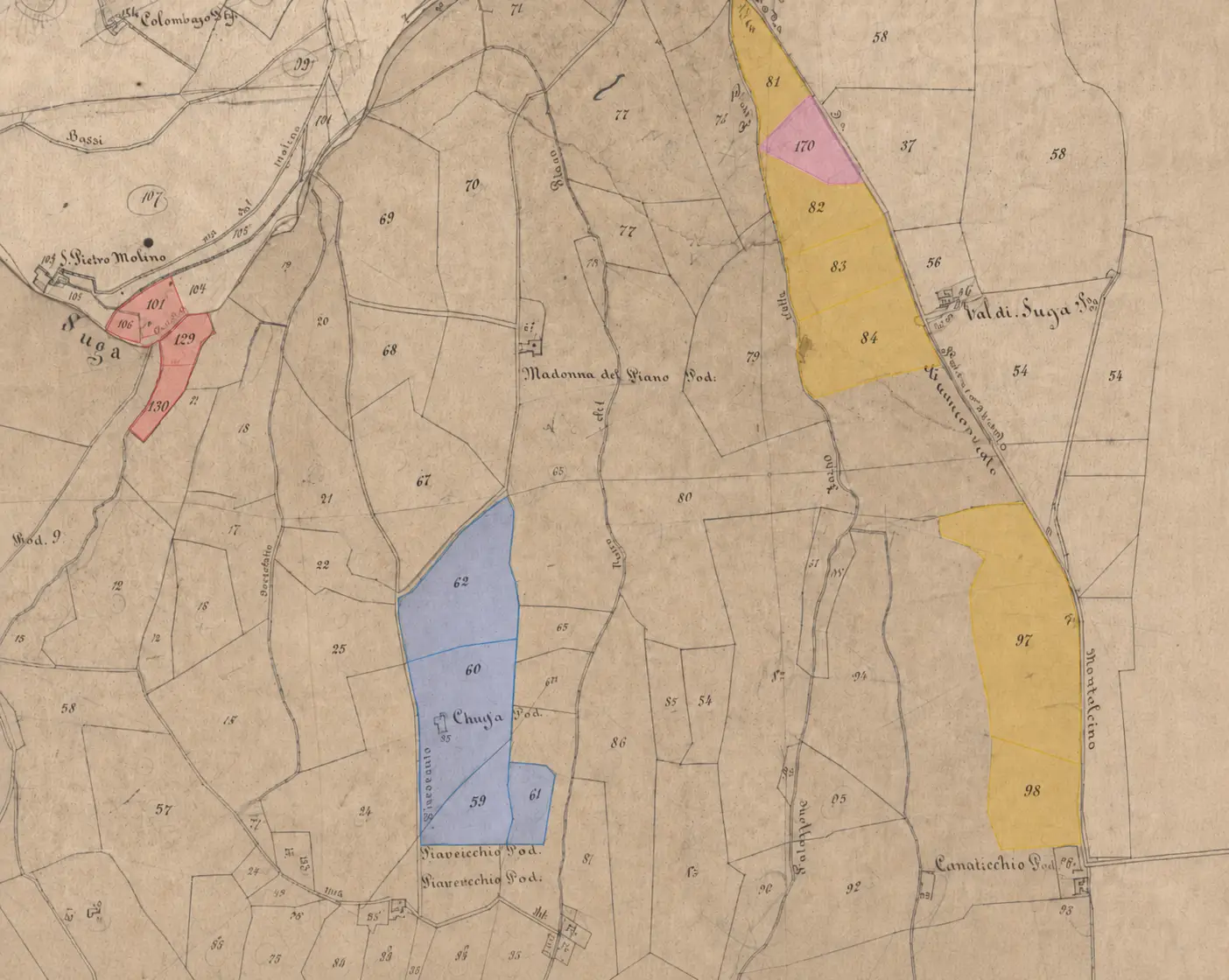
The coloured research map above marks parcels 59–62 around the Chiusa farm in blue. It is Brian Pasch’s annotation of the historic map, not a boundary drawn by the surveyors, and each identification should be checked against the owner table. The original sheet can be viewed in the CASTORE map viewer (Scarnaquoja, sheet 1).
Who was Gaetano?
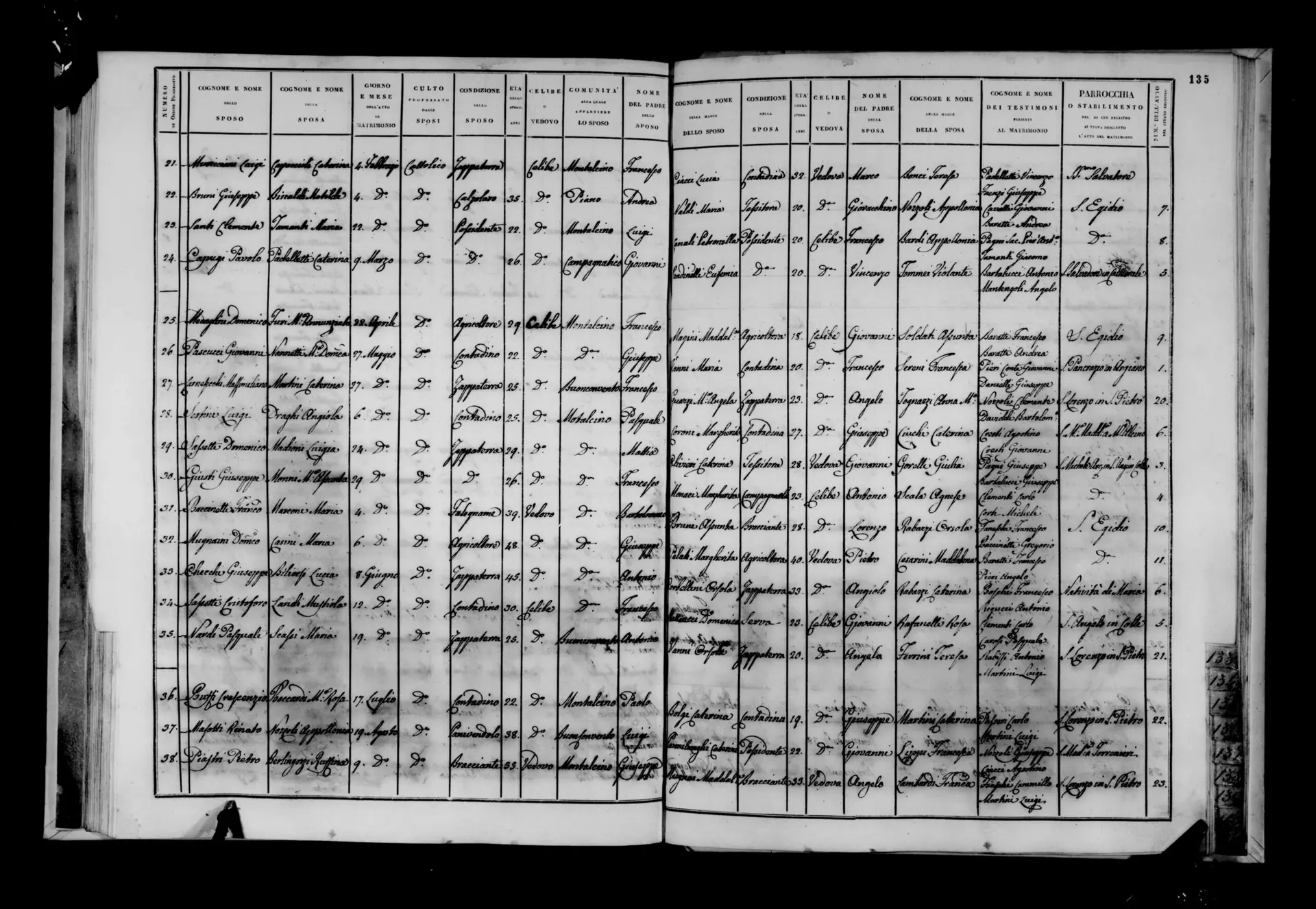
The patronymic “di Francesco” identifies him. Carle’s genealogy shows Gaetano Tamanti, born in 1801, as a son of Dr Francesco Tamanti (b. 1757) and Apollonia Bardi (Carle, La patria locale, 1996, p. 292). His sister Maria married Clemente Santi on 12 February 1819, and her marriage act names her parents as Francesco and Appollonia Bardi (original on Antenati). Carle records that Gaetano never married, and that he made a will in 1847 (Carle, 1996, p. 296). The 1841 census lists a Gaetano Tamanti, aged 39, as a proprietario (property owner) in Sant’Egidio.
Older names: 1692, 1700 and 1832
In 1692 a Sienese fiscal survey records a podere called Chiusa under “Tamanti Dr.” (Bonelli Conenna, 1990, p. 162). In 1700 the tithe register of San Lorenzo lists “Chiusa Tamanti.” The same page also lists a “La Chiusa Passari,” so the name was not unique, and the case for continuity rests on the Tamanti-specific entries. In 1832 the SS. Salvatore register lists “Scarnaquoia Tamanti” (Brandi, Studi e Trascrizioni). The 1692 survey also names a separate Tamanti podere called “Scannaquoia.” In 1902 Ferruccio Biondi Santi won a gold medal for his vineyard at “Scarnacuoia.” The names are close enough to be striking, but whether they refer to the same property has not been proved.
An 1810 clue
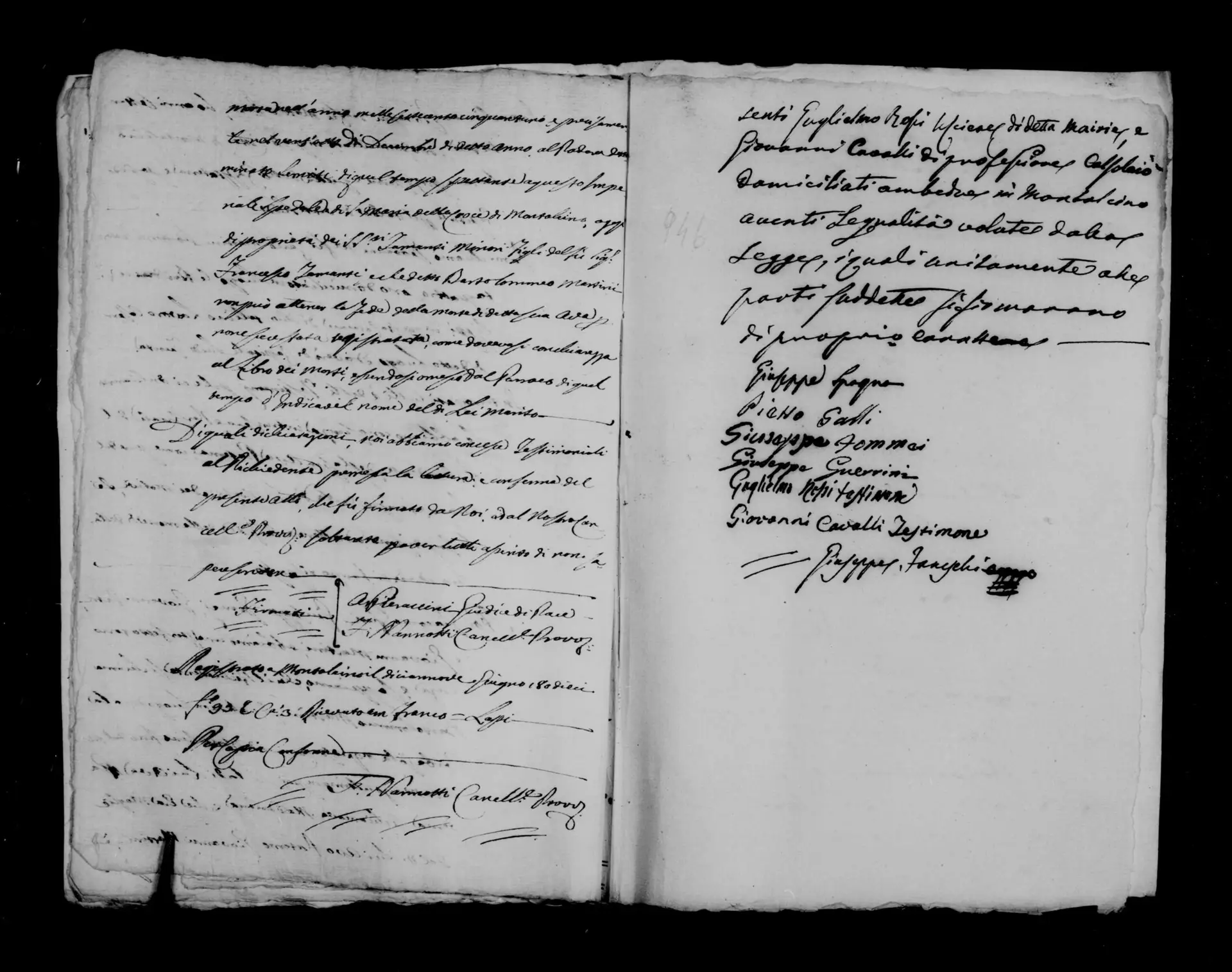
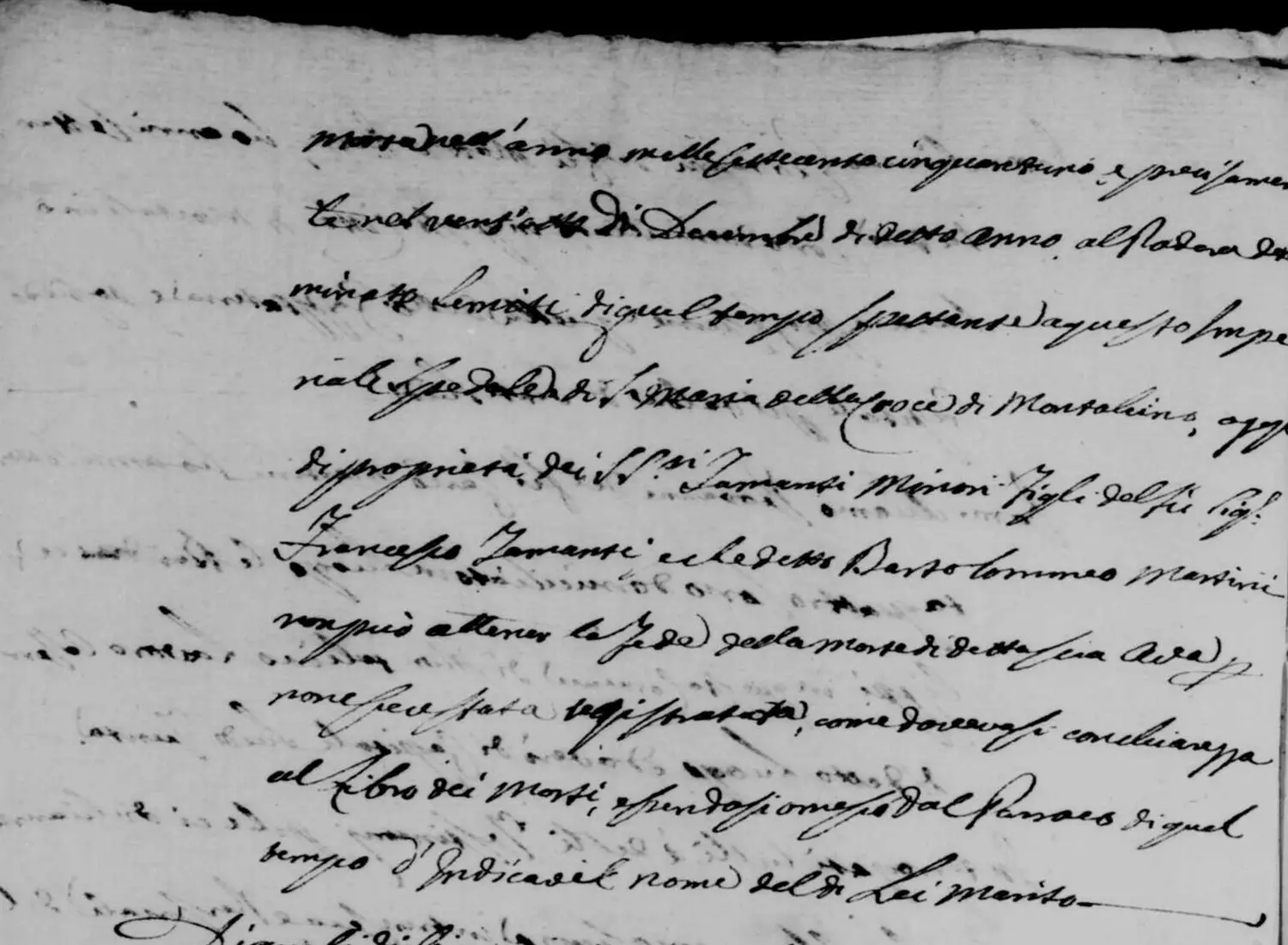
A notarial statement of 19 June 1810, filed with a marriage in Montalcino, describes a farm that had once belonged to the hospital of Santa Maria della Croce and was then “the property of the minor Tamanti children of the late Sig. Francesco Tamanti” (detail of the act; full page; original on Antenati). Gaetano and Maria are plausible candidates for those children, but the act does not name them, and the farm’s name cannot be read with confidence. It cannot yet be equated with Chiusa. Gaetano’s farmhouse at parcel 117 in countryside section A is another place to test.
The chapel of 1840
On 2 October 1840 Gaetano Tamanti asked the bishop for permission to build a chapel on the podere “Chiusa” that he owned. He proposed dedicating it to Saint Francis of Assisi, Saint Gaetano and Saint Apollonia. Those names echo his father Francesco, Gaetano himself and his mother Apollonia. It was to serve as a burial place for the family, and he promised to maintain it at his own expense (Brandi, Studi e Trascrizioni).
Le Chiuse today dates its historic residence to 1840, and one of its guest apartments, the Cappella, occupies a small deconsecrated church. This may well be Gaetano’s family chapel, but that is not yet certain. The building’s dedication, fabric, inscriptions and any burial spaces still need to be examined.
From Gaetano to the Biondi Santi
The estate’s own history says Le Chiuse entered the Santi family as part of Maria Tamanti’s dowry when she married Clemente Santi. It then passed through Caterina Santi to Ferruccio Biondi Santi, later to Tancredi’s daughter Fiorella, and after Fiorella’s death in 1986 to Simonetta Valiani. Simonetta restored the farm, chapel, vineyards and cellar with her husband Nicolò Magnelli and their son Lorenzo.
There is a puzzle here. Maria married in 1819, yet in 1820 it is her brother Gaetano, not Maria or her husband, who owns the Chiusa house, and he still owns the podere in 1840. The answer may lie in a divided inheritance from their father, in land kept by Gaetano while other property formed Maria’s dowry, or in a later transfer that family memory has simplified. The dowry settlement and the Campione entries for parcels 59–62 should settle it. The Santi side of the story is told in the Le Chiuse inheritance, part of the Biondi-Santi connection.
Neighbours in Scarnaquoja
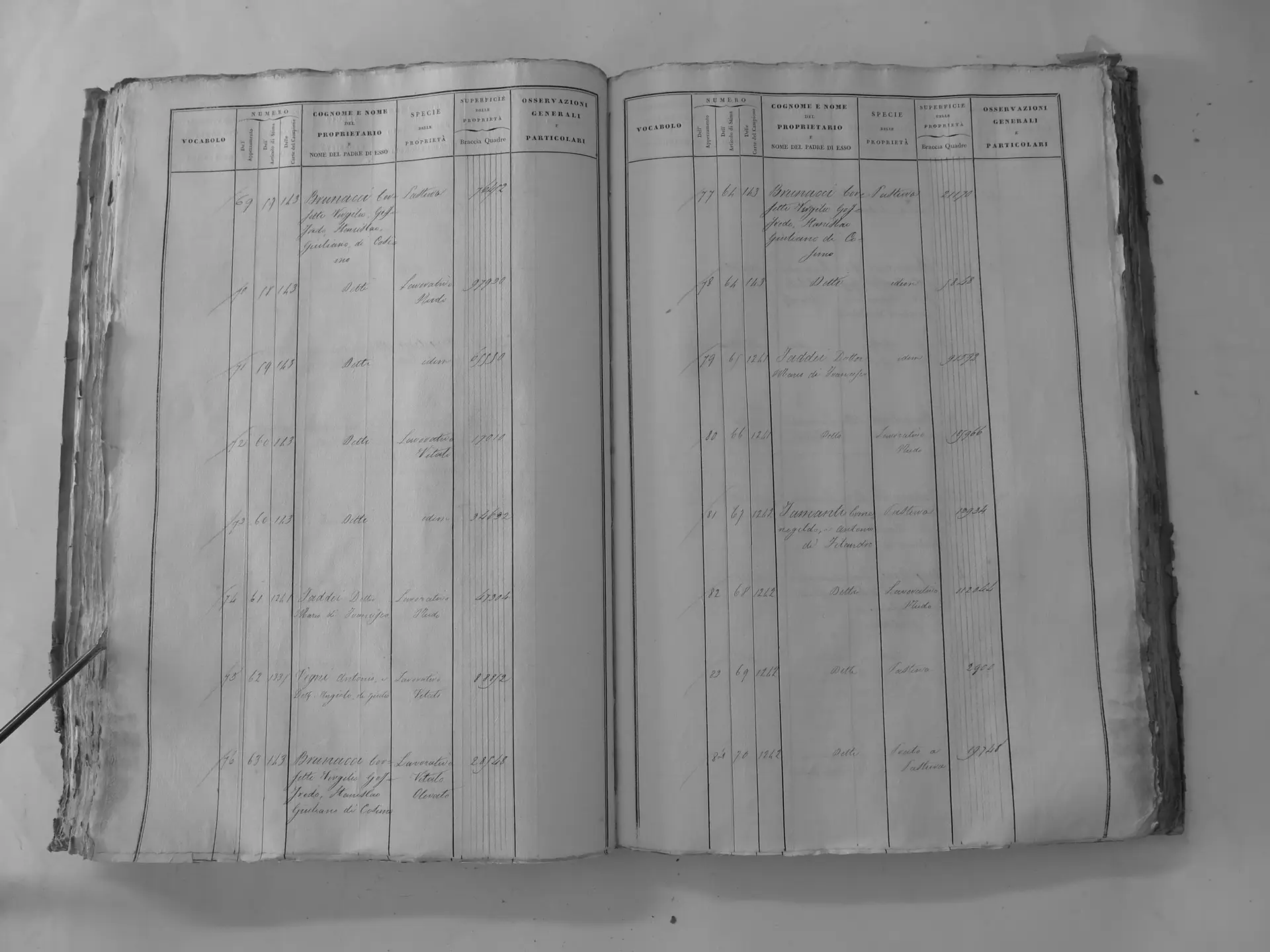
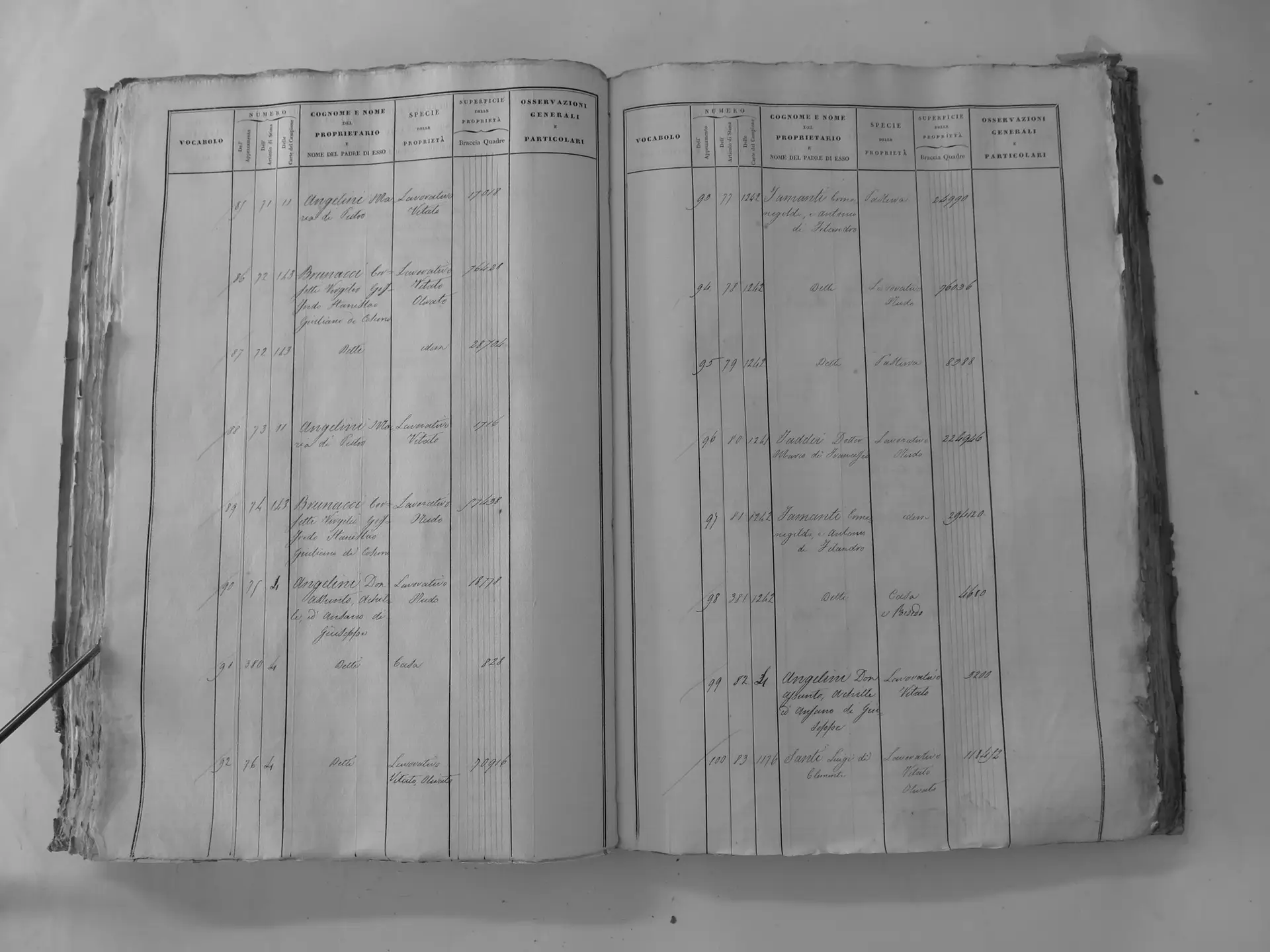
Chiusa was not the only Tamanti land in the section. Ermenegildo and Antonio Tamanti di Filandro, from another branch of the family, held parcels 81–84, 93–98 and 270, about 19 hectares with a house, arable land and pasture (Tomo III p. 102, p. 103, p. 115). Their holding is a separate account and should not be merged with Gaetano’s. A Luigi Santi di Clemente held parcels 100, 101, 129 and 130 nearby. Which Clemente was his father has not yet been established.
Sources on this page
- Catasto Generale della Toscana, Montalcino, Tavole indicative, Scarnaquoja (section U′), Tomo III p. 101, p. 102, p. 103, p. 108, p. 115, p. 123 (CASTORE)
- CASTORE map, Scarnaquoja section, sheet 1 (208U101I), and Brian Pasch’s coloured parcel map (map)
- Marriage of Clemente Santi and Maria Tamanti, 12 February 1819, S. Egidio act 8 (scan; Antenati)
- Notarial act of 19 June 1810, Matrimoni allegati reg. 196, p. 344 (scan, detail; Antenati)
- Don Antonio Brandi, Studi e Trascrizioni (1700 and 1832 decimari; 1840 chapel petition)
- Lucia Bonelli Conenna, Il contado senese alla fine del XVII secolo (1990), p. 162
- Lucia Carle, La patria locale (1996), pp. 292, 296
- Luisa Scrivani, Era il 1841 a Montalcino (Effigi, 2017), p. 132
- Stefano Cinelli Colombini, Brunello, ritratti a memoria, 2nd ed. (2021), pp. 74–75
- Le Chiuse, estate history and Cappella apartment